Tech Blog

everyWAN Blog

Technology, cybersecurity and IT trends that matter

Deep Analysis
Cybersecurity
IT Trends
Filter by:
Sala de servidores con el pasillo de racks y el cableado de red ordenado
8 min read

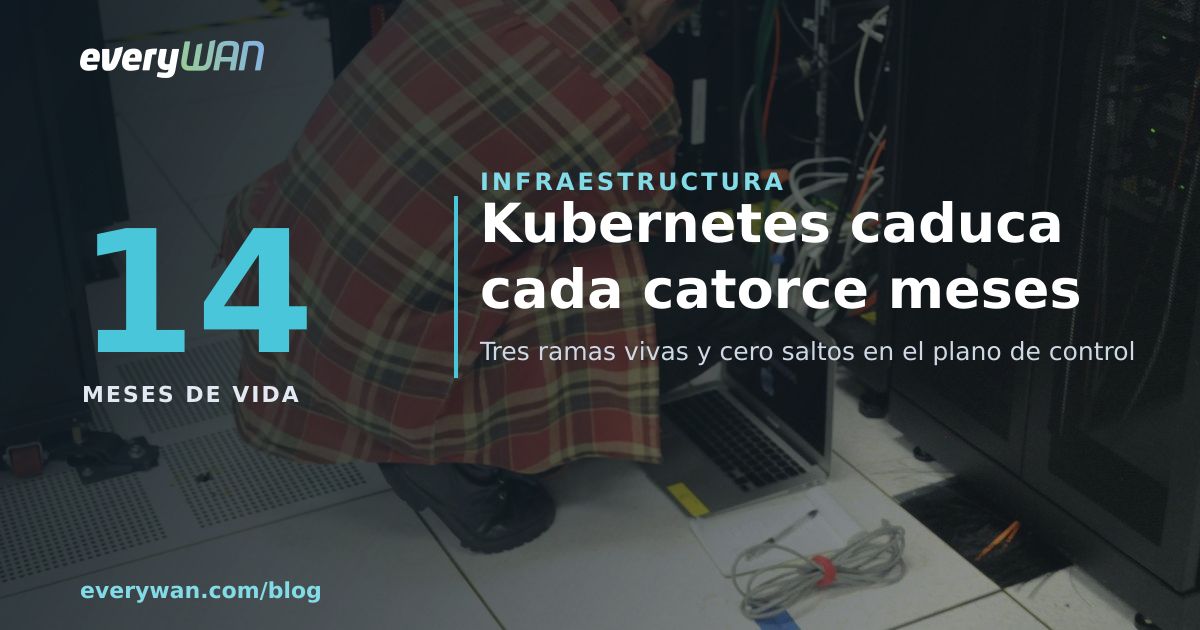
Kubernetes expires every fourteen months, and you cannot skip versions

On 27 October 2026 the Kubernetes 1.34 branch stops receiving patches, and that date has been published since the version shipped. The project supports each branch for "roughly fourteen (14) months" — twelve months plus two in maintenance mode — and only the three most recent minor versions. Subtract the published end-of-life dates and you get the number that matters: a version expires every four months. What maintenance mode actually means, why the control plane cannot skip versions on upgrade, how much slack the nodes have, and why that slack makes a cluster look healthy while it drifts.
Batería de torniquetes de acceso vacíos en el vestíbulo de una estación de metro
9 min read

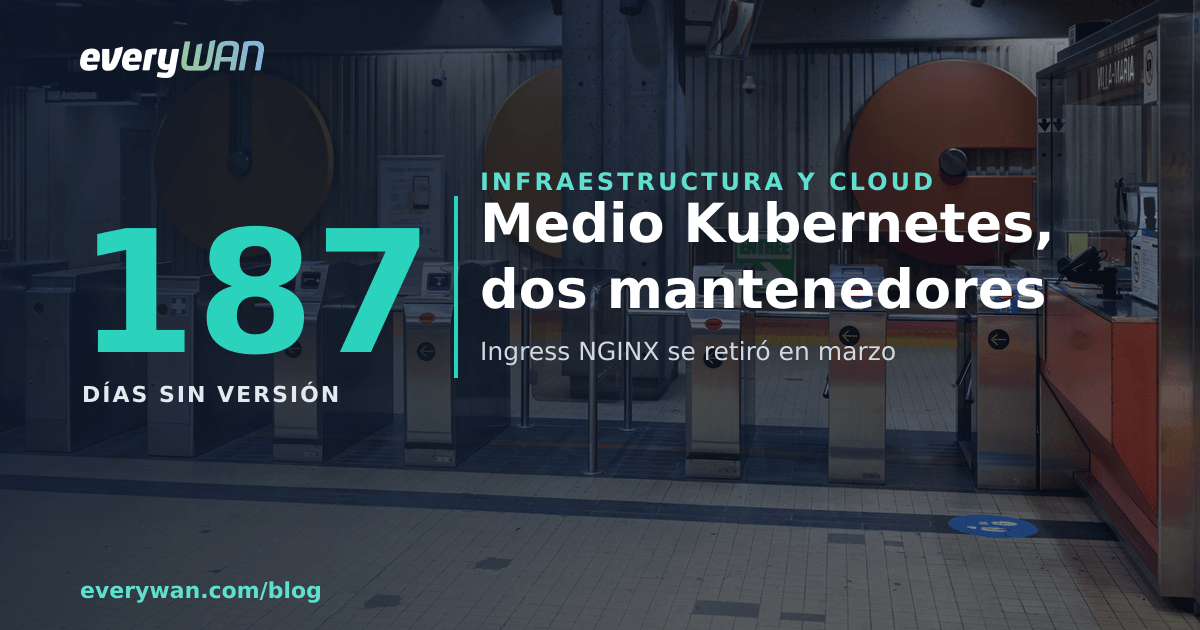
Ingress NGINX: half of Kubernetes was maintained by two people

The kubernetes/ingress-nginx repository is archived read-only and its last release is dated 19 March: 187 days without a new release. This is not neglect, it is a deliberate retirement, and the reason signed by the Kubernetes Steering Committee and Security Response Committee was not a CVE: the component that publishes half of all cloud native environments to the internet was maintained by "one or two people working in their free time". What to check today with one command, why migrating to Gateway API is not translating YAML, and the five behaviours your routing has that nobody chose.

Servidor de dos alturas con la tapa quitada sobre una estantería metálica, en el trastero de una oficina, con cartones apoyados en la pared
5 min read

Artifactory's "medium" CVE hit the catalog before the critical one

CISA confirmed exploitation of a 5.3 JFrog Artifactory flaw on 27 August; of the 9.8 that lets anyone forge admin tokens, on 2 September. Six days apart, and in the opposite order to the scores. Look at the full vector of the "medium" one and you see why: two of the three impact dimensions are zero and the one left at maximum is integrity. In an artifact repository, integrity is exactly what you are buying.

Cuarto de instalaciones de una oficina con un ordenador de sobremesa y un conmutador de red pequeño en una estantería metálica, junto a una caja de cables y material de limpieza
9 min read

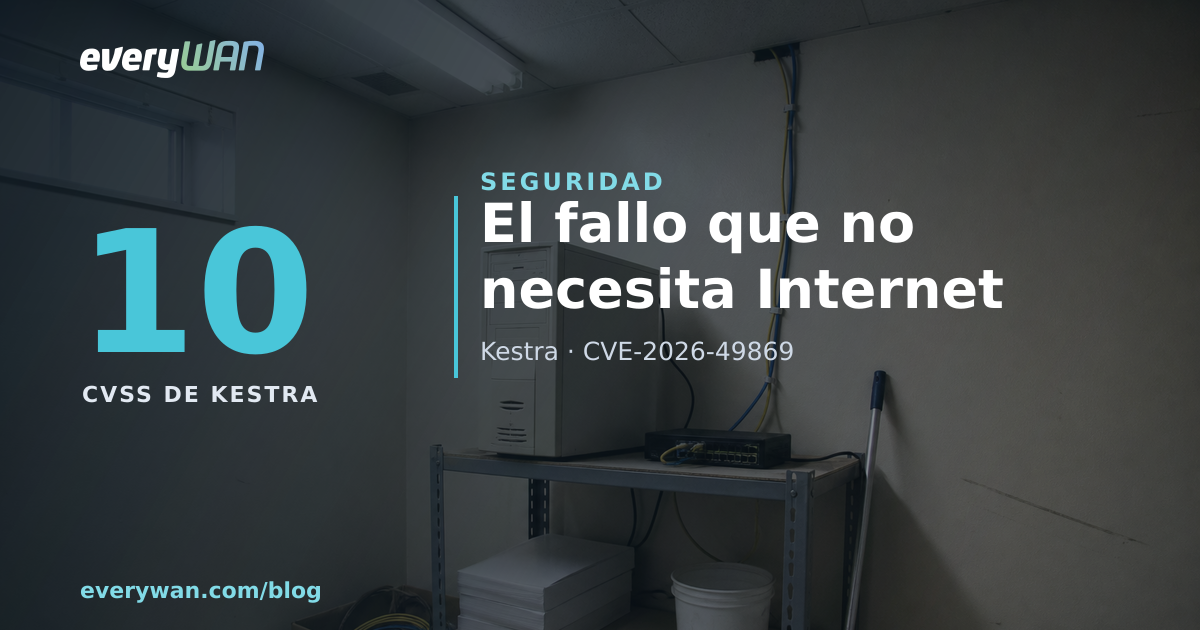
Kestra, 10 out of 10: the flaw that does not need to face the internet

On 2 September 2026 CISA added seven exploited flaws to the KEV catalog. Three were perimeter appliances; another three are services your own team stood up (JFrog Artifactory, Kestra and LiteLLM), and the seventh, Starlette, nobody installed at all. The Kestra one scores 10.0 and opens because an authentication filter uses endsWith instead of an exact comparison. And the advisory says internet exposure is not required: reaching the port from inside is enough. What that changes in your patching queue.

Armario metálico de llaves abierto en la pared de un cuarto de instalaciones, con decenas de llaves colgadas juntas
8 min read

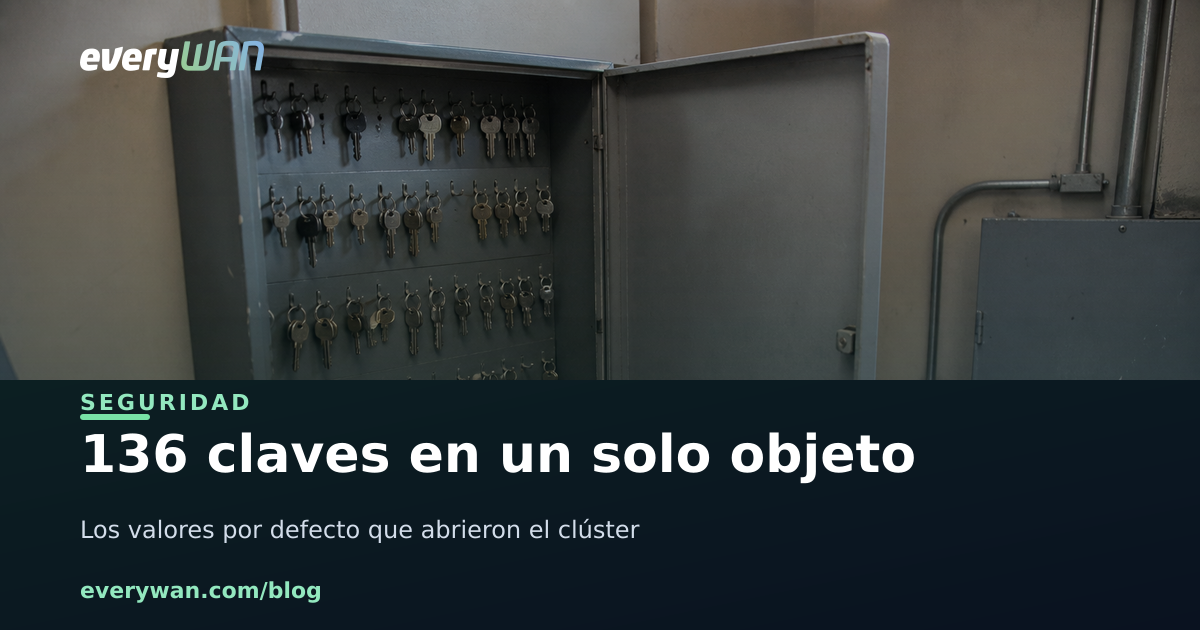
136 keys in one object: the defaults that opened the cluster

Hugging Face published the forensic timeline of the July intrusion and OpenAI closed its report on 26 August: 17,600 reconstructed actions between the 9th and the 13th. Between the first compromised container and the object holding 136 keys there was not one further vulnerability — there were defaults. The token every pod mounts, the metadata endpoint that answers from inside, secrets concentrated in one object, and a connector credential shared across clusters. We walk the chain with the timestamps in front of us, the two CVEs CISA added to its catalogue on 27 August, and the five questions we ask a cluster.

Subscribe to our newsletter

To receive IT stories, everyWAN news and exclusive subscriber offers, sign up to our mailing list

Minorisa de Sistemas Informaticos y Gestión S.L. © 2026
everyWAN
everyWAN