Tech Blog

everyWAN Blog

Technology, cybersecurity and IT trends that matter

Deep Analysis
Cybersecurity
IT Trends
Filter by:
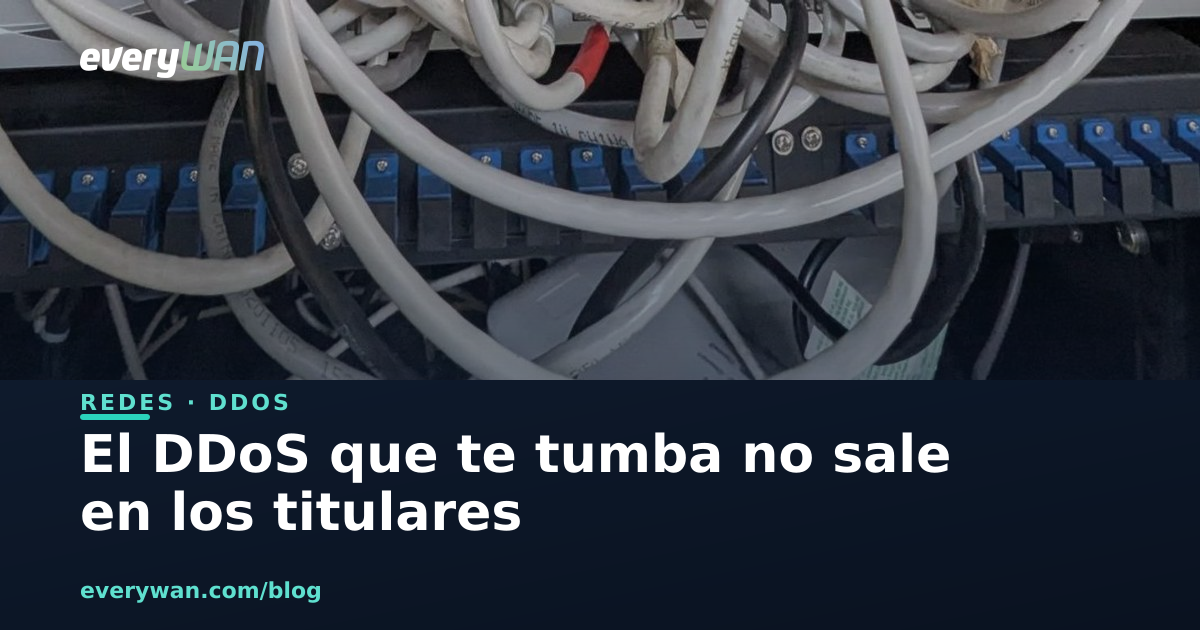
Rack de comunicaciones con paneles de parcheo, latiguillos de red y una bandeja de fibra en la parte baja
5 min read

The DDoS that takes you down is not in the headlines

In the first half of 2026, 96.62% of the network-layer attacks Cloudflare mitigated stayed under 500 Mbps and 90.60% ended in under ten minutes. The attack that makes the press is measured in tens of terabits; the one that will take a mid-sized company offline fits inside an ordinary fibre link and is over before anyone picks up the phone. Why the metric that matters is time to activation and not terabits of capacity, what changes now that DNS floods have gone from 25.7% to 40% in a single quarter, and the five questions we ask before buying any mitigation.


Armario de comunicaciones de pared con switch y cables de red
10 min read

Windows DNS, an unauthenticated 9.8: what turns a bug into a worm is not the bug, it's your network

On 8 September Microsoft shipped the largest batch of patches in its history. Dustin Childs, of the Zero Day Initiative, counts twenty that could be classified as wormable, spread across thirteen components. Those thirteen are not one list: they are two. Seven of those CVEs sit in services your domain requires every machine to reach — DNS, Netlogon, Active Directory, DHCP — and eleven sit in roles Windows does not install on its own. The first half is managed with patching order; the second, by uninstalling. And hardly anyone knows which of the two they have switched on.

Una tormenta de verano avanzando sobre el desierto, origen del fallo de refrigeración que apagó 5.000 servidores
5 min read

Your servers can be switched off by someone you never signed anything with

On 13 August more than 5,000 servers were powered off in a building in Phoenix, taking down the websites, email and DNS of thousands of companies. The decision to shut down was the right one; what is interesting is the chain the order came down, because the end customer sits at the bottom of it with no contract with whoever decides. What to ask about the building your hardware lives in, and why DNS took down people who were not even there.

Muro de ladrillo con la publicidad pintada de un comercio que ya no existe: el nombre sigue ahí mucho después de que el negocio cerrara
5 min read

An expired .es is released in ten days. A .com can give you eighty

Infoblox published on 13 August that around 65,000 expired domains were re-registered every day during the first half of 2026: nearly 20% of all the registrations they observe. A .com calendar gives you room —up to 45 days of auto-renew grace and 30 of redemption. A .es one does not: ten days after expiry it is cancelled and available again, with no redemption, and only the administrative or billing contact can request the renewal. What the catcher is buying, what still points at that name once it is no longer yours, and when there is nothing to renew.

Subscribe to our newsletter

To receive IT stories, everyWAN news and exclusive subscriber offers, sign up to our mailing list

Minorisa de Sistemas Informaticos y Gestión S.L. © 2026
everyWAN
everyWAN