Tech Blog

everyWAN Blog

Technology, cybersecurity and IT trends that matter

Deep Analysis
Cybersecurity
IT Trends
Filter by:
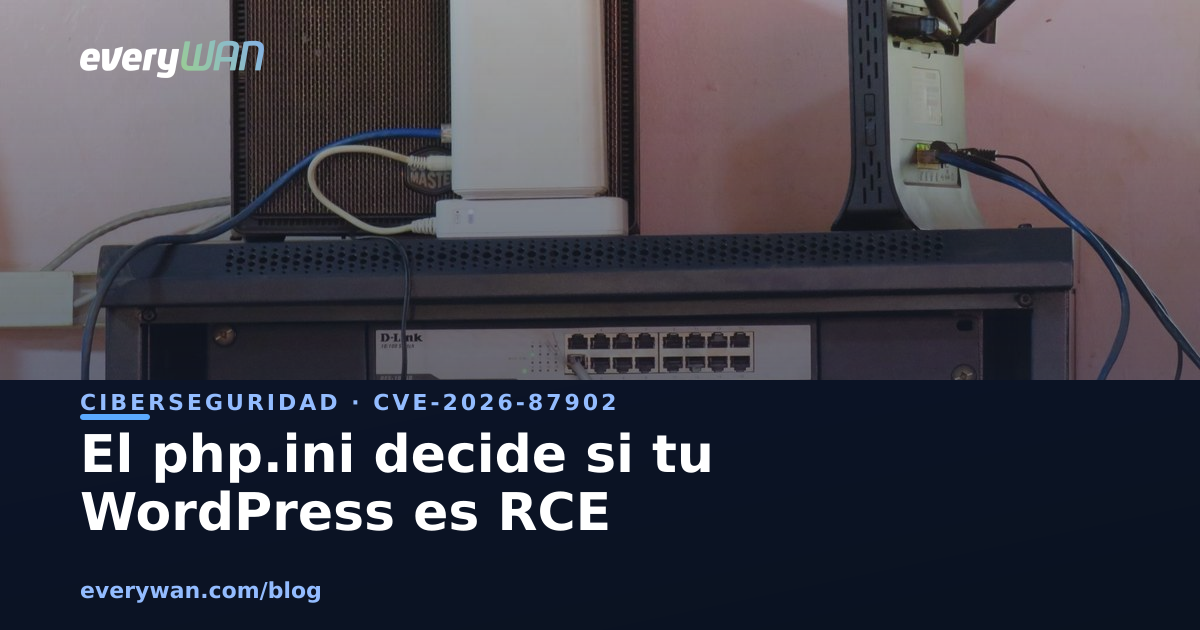
Armario de comunicaciones montado en la pared de una pequeña empresa, con un router, un módem y un switch, y los cables recogidos sin orden dentro
8 min read

The flaw is WordPress's; your php.ini decides the exposure

CVE-2026-87902 entered CISA's Known Exploited Vulnerabilities catalogue on 25 September, three days after the advisory and a proof of concept went public. It is a 9.2 and it is WordPress core, patched across 25 branches down to 4.7.37 (December 2016). But 9.2 measures the damage, not your exposure: the CVSS 4.0 vector itself carries AT:P — "conditions are required" — and none of the deciding conditions belong to WordPress. A PHP directive, a PEAR file and a directory inside your active theme. What each one checks, why the obvious command for looking at it from a shell returns a false answer — we measured it on a box running PHP 8.3.6 — and what NOT to do if you suspect it already happened.
Tipos de imprenta de madera: PostScript nació para hablar con impresoras y sigue vivo dentro de las bibliotecas que procesan imágenes
7 min read

It was called .png and inside it was PostScript: the WordPress 7.0.4 flaw

On 12 August WordPress shipped 7.0.4 with a single fix: CVE-2026-65640, remote code execution by uploading a file that announces itself as an image and is PostScript inside. The patch reaches back to the 4.7 branch, from December 2016. For it to affect you two conditions have to hold at once, and the first one is not yours to decide. Why validating the extension does not validate what you think, what "requires Author role" really means, and how to check it in ten minutes.

Subscribe to our newsletter

To receive IT stories, everyWAN news and exclusive subscriber offers, sign up to our mailing list

Minorisa de Sistemas Informaticos y Gestión S.L. © 2026
everyWAN
everyWAN