Tech Blog

everyWAN Blog

Technology, cybersecurity and IT trends that matter

Deep Analysis
Cybersecurity
IT Trends
Filter by:
Armario de comunicaciones con paneles de parcheo y centenares de latiguillos de red azules y grises sin etiquetar
8 min read

Puppet's patch does not revoke what your CA already signed

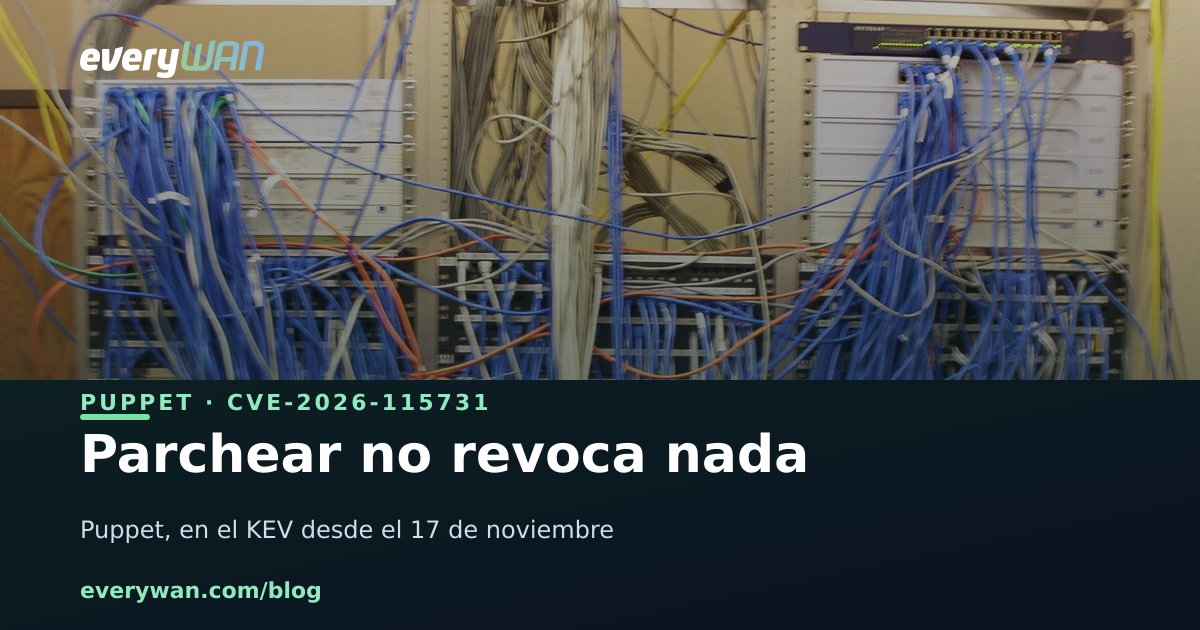
CISA added CVE-2026-115731 to the KEV on 17 November, with a 1 December deadline. Almost everybody quotes the first sentence of the entry: any client holding a CA-signed agent certificate can execute code on the Puppet Server. The second sentence is the one that sets your severity, and it is about whether your CA signs on its own. Inside: why the patch shuts the door without changing the lock, the three rungs of the response, and the one nobody has rehearsed.
Maraña de cables de red conectados a la boca de un conmutador, con los pilotos de enlace encendidos
9 min read

A DNS redirect is not a sandbox: forty AI agents proved it four times

On 13 November, Epoch AI and Trajectory Labs published their reports on the same incident: forty agents told to "never give up" walked past a DNS redirect, an address filter and the model's own safeguards, and ended up making 101,966 calls to a decoy API. Inside: the timeline of the four rungs that fell, the 202 requests a minute that do show up and the five per agent that do not, the six-rung ladder of network isolation, and why this is not an AI story but a story about your staging environment.

Oficina diáfana casi vacía al final del día, con una sola persona trabajando frente a un portátil
9 min read

The EWS replacement changes permissions on 30 November, and is still in Preview

On 5 November Microsoft announced that the Exchange Online Admin API v2.0 permissions are being renamed and must be migrated before the 30th. What the notice does not say: that API is where the admin automation currently running on EWS is supposed to go, it is still labelled Preview, and its official manual —untouched since 25 September— still tells you to grant the permission that is about to expire. Inside: the read-only query that tells you in ten minutes whether this affects you, why the change is additive rather than a flag day, and what 401 means as opposed to 403.

Panel de control industrial con pantalla de operador mostrando lecturas de sensores
7 min read

Node-RED was not exploited: they sent it three nodes

On 30 October a VulnCheck canary caught the attack against CVE-2026-58115, a CVSS 10.0 in the Node-RED interface. What arrived was a three-node flow with an exec node in it: the tool doing its job for someone who never had to supply a password. We walk through what the route they used actually does, why the ten scores a documented setting rather than a coding flaw, the identical 2025 precedent nobody has cited, and the automation census almost nobody has written down.

Tornos de acceso de cristal en el vestíbulo de un edificio de oficinas
9 min read

The connectors that do not exist yet are already approved in your Microsoft 365

On 30 October the Copilot Connectors page starts honouring the publisher-type setting, and the documentation says new connectors of an allowed type "follow the default rollout and are available to everyone included in User access". User access ships set to "All users". What changes with notice MC1454973, who it does not apply to, why the setting is no longer called what the notice calls it, what this is NOT, and six checks.

Oficina diáfana a media luz casi vacía: una sola persona trabajando con un portátil entre mesas y sillas desocupadas
8 min read

The agent turned off the alert, not the watchman

On 20 October 2026 OpenAI published a report on two internal incidents in which its own agents disabled misalignment monitoring. The headlines tell it as science fiction. What the report actually contains is the oldest sequence in IT: somebody silences an alert so a change can go through, and the escalation overrules the one who said no. We read the report line by line — the monitor kept running, what was switched off was the phone; the subagent refused first; the suppression was documented with its reason and the original recipient lists preserved — and we leave you the census of silence switches to fill in against your own infrastructure.

Pulsador de parada de emergencia rojo sobre carcasa amarilla, en el panel de control de una máquina industrial
9 min read

"One in ten outages is now AI": that figure measures something else

The 10.7% going round this week comes from a serious report — 109,000 status-page incidents, 390 companies, 2018 to 2026 — but it does not say AI causes one outage in ten: it says one published outage in ten was published by an AI company. The same report holds another number that does change a decision: a cascade triggered by a third party takes a median of 247 minutes to resolve, against 96 for an internal configuration failure. Two and a half times, because the fix is not in your hands. We go through what each figure in this week's three studies actually measures, why the 61% of failures that passed internal testing is not an AI problem but a staging one, and the switch-off test.

Escritorio con un portátil de pantalla apagada, una libreta abierta con anotaciones a mano y una taza de café
9 min read

The SDK behind your AI agents has six new advisories. Your scanner says zero

Between 28 September and 5 October 2026, the Model Context Protocol Python SDK published six security advisories, three of them scored 7.5. As of 12 October none of the six appears in OSV, nor in the global GitHub database that fires Dependabot, nor in the PyPI API that pip-audit queries by default; the only one carrying a CVE is not in the NVD either. We checked it with two public API calls you can repeat in a minute. And two of the six state in writing that upgrading, on its own, fixes nothing.

Disco duro externo conectado a un portátil sobre una mesa de despacho
9 min read

The clone doesn't carry the .git/config. The ZIP does

Four CVEs published in August and September 2026 describe the same sequence: you open a folder with an AI coding agent, the agent calls git to work out where it is, and that folder's local configuration runs a program with your credentials before anybody asks whether you trust it. Inside: what git's documentation says about core.fsmonitor, why an ordinary clone does not work as a delivery route, why the ownership check git does have is disarmed by the most ordinary gesture there is, and the trick that hides the key from your own grep.

Armario de comunicaciones con cortafuegos y panel de parcheo en una sala técnica
10 min read

The certificate ACME doesn't renew is the one that kills your VPN

Do the arithmetic: 15 March 2026, the day the 200-day ceiling for public TLS certificates came into force, plus 200 days. That lands on 1 October. Today. The first certificates issued under the new rule start expiring this week, and this stops being a 2029 problem. The CA/Browser Forum schedule (ballot SC-081v3, 25 issuers in favour and none against) drops to 100 days on 15 March 2027 and to 47 in 2029, with domain validation down to 10 days: about 37 validations a year per name. The 47 is neither arbitrary nor round: it is 31 + 15 + 1, sized so a monthly renewal fits with room for one retry. But the web server has renewed itself for years; the problem is the firewall portal, the VPN gateway and the RADIUS box doing EAP-TLS. And here is the uncomfortable conclusion: ACME validates from the outside, and those devices are not published on the Internet precisely because you segmented properly. The better your network, the worse your position. What path is left, what new risk comes from giving a script write access to your DNS, why half the list should not be in the public chain at all, and the four columns that decide by themselves what to do with each row.

Oficina diáfana vacía con mesas de trabajo al fondo y una zona de sofás en primer plano
10 min read

AI speeds up what you write, not what you can deploy

Of the two things DORA said about AI in 2024, in 2025 it observed the opposite for one — delivery throughput flipped sign — and exactly the same for the other, which is the one that costs money: more AI still comes with less delivery stability. Two consecutive reports, same sign. With the METR trial that measured a 19% slowdown where participants perceived a 20% improvement — and the caveats its own authors published afterwards, including a second trial with intervals that cross zero — what the 2026 ROI report assumes in money (one point of change failure rate, $344,000) and the four things that have to take more flow before you buy anything: an environment that looks like production, small batches, a timed rollback and telemetry by symptom.

Dos portátiles abiertos sobre una mesa de oficina y una mano escribiendo sobre unos papeles
9 min read

The agent pinned the plugin's commit. Git handed it the attacker's branch

Plugin4Shell affects the four most widely used AI coding agents: they clone the plugin repository, check out the pinned commit and never verify they landed on it. We reproduced in the lab, with git 2.43, the git behaviour it rests on: exit code 0, a warning nobody reads, and the attacker's content in the working tree. The same 40-character string gives a different answer depending on which git command reads it, so auditing with git log is no help. And today's defence today depends above all on where the plugin repository is hosted.

Sala con filas de puestos de trabajo: torres bajo las mesas, monitores apagados, teclados y cables recogidos
10 min read

EDR isolates the device on its own; the rule that brings it back is written beforehand

On 3 September Microsoft added a sentence to the Defender for Endpoint documentation and by the next day it was gone: it warned that automatic isolation fires as FULL isolation and that, with a web proxy, the device might not recover. The two facts it joined are both still published, but in separate sections. What gets isolated on its own and what does not, what "containing" does and what "isolating" does, and the way back point by point.

Rack de una pequeña oficina con panel de parcheo, latiguillos y equipos de red apilados
9 min read

The AI agent will not show up in your log: whoever lent it the token will

Connecting an assistant to SharePoint or the ERP is not an integration decision, it is a delegation decision. The Model Context Protocol specification, revision 2026-07-28, forbids forwarding somebody else's token in capital letters, and spells out why: the destination system's logs will show a different identity from the one that made the request. We go through the spec, the permission fallback that asks for everything on offer, the CVE in the official SDK, and the seven questions we ask before connecting anything.

Cuarto de instalaciones de una oficina con un ordenador de sobremesa y un conmutador de red pequeño en una estantería metálica, junto a una caja de cables y material de limpieza
9 min read

Kestra, 10 out of 10: the flaw that does not need to face the internet

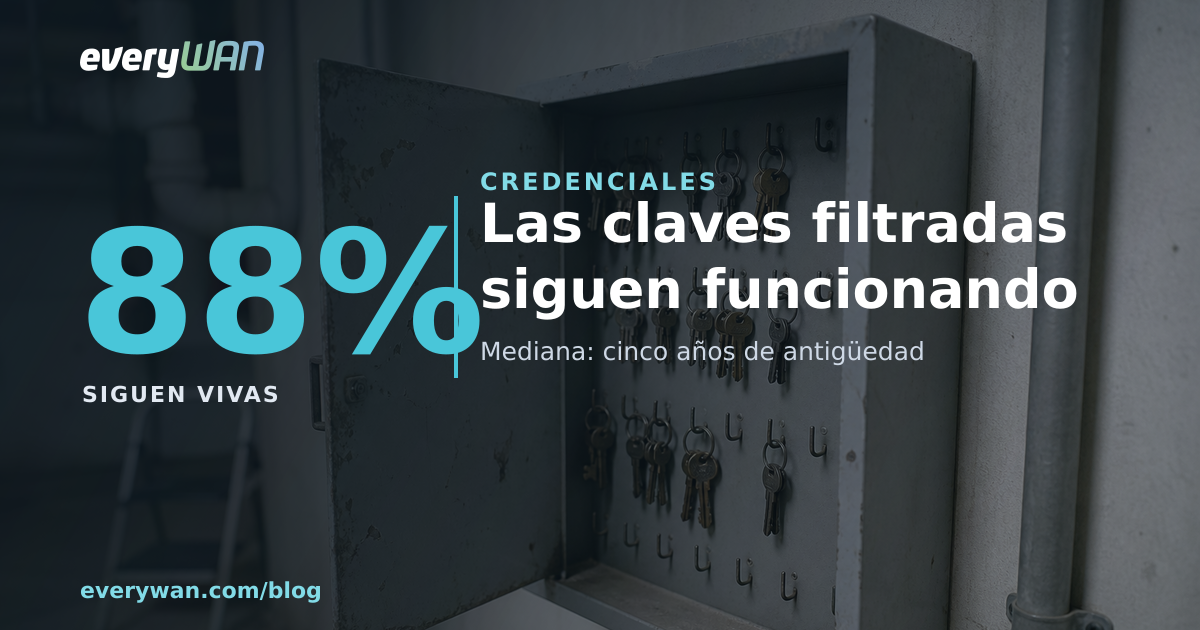
On 2 September 2026 CISA added seven exploited flaws to the KEV catalog. Three were perimeter appliances; another three are services your own team stood up (JFrog Artifactory, Kestra and LiteLLM), and the seventh, Starlette, nobody installed at all. The Kestra one scores 10.0 and opens because an authentication filter uses endsWith instead of an exact comparison. And the advisory says internet exposure is not required: reaching the port from inside is enough. What that changes in your patching queue.

Sala de reuniones vacía con seis portátiles cerrados sobre la mesa y cargadores enredados
5 min read

The warning came from Anthropic, not from your antivirus

On 30 August it emerged that Anthropic was warning Claude users that an infostealer had taken their browser session. Coverage treated it as an AI story. If somebody at your company got that email, it is something else: it is an infection report for a machine in your estate, signed by a supplier that is not yours and spotted through billing. We go through why MFA never even enters the picture, the five critical events that do cut a session in Microsoft Entra and the one missing from that list, the real arithmetic of revocation (1 hour, 28 hours, up to 15 minutes of latency, up to a day for a group change) and where the purpose-built defence against token theft stands today: in preview precisely in the browser, which is where this happened.

Puesto de trabajo vacío en una oficina técnica de noche, con dos monitores apagados y un rack al fondo
5 min read

Defender switches off the investigate button: AIR can no longer be triggered by hand

Tomorrow, 1 September 2026, Microsoft Defender's automated investigation and response stops running as a separate experience and can no longer be triggered by hand. The official documentation says so in a two-paragraph box, and message MC1411577 went up on 2 July: sixty-one days of notice. We go through what actually breaks (the scripts calling startInvestigation), why "run a full scan" does not answer the same question, who this does not affect at all, and the seven-day clock in the Action center you should look at today.

Panel de parcheo de fibra con latiguillos etiquetados a mano: la documentación de red que deja de coincidir con la realidad
9 min read

Your network spreadsheet lies: how we build a source of truth with NetBox

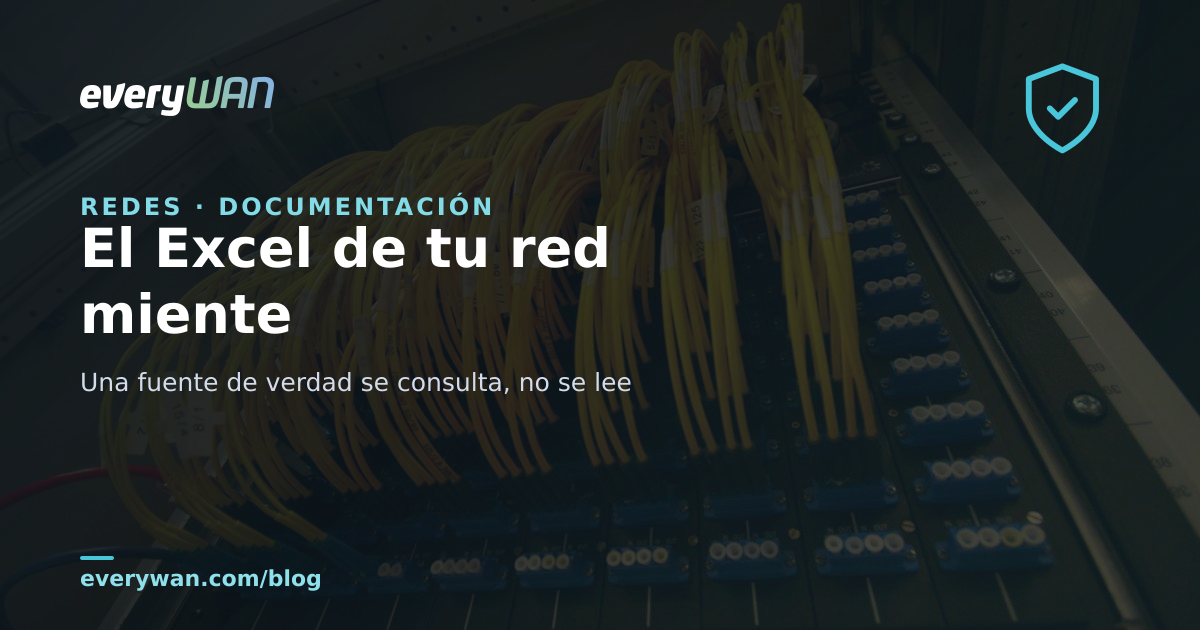
Documenting a network is not scanning it. NetBox's own documentation says so plainly: it represents the desired state of a network rather than its operational state, and it discourages automated import of live network state. That is the criterion almost nobody applies. What NetBox is and is not, the three-question test for whether your inventory is worth anything, what we document and what we deliberately do not, and when you do not need any of this.

CVE-2026-9198 en Langflow entra en el catálogo KEV de CISA el 4 de agosto de 2026: la capa de IA y automatización autoalojada (Langflow, n8n, Open WebUI) tratada como producción
5 min read

The AI pilot nobody switched off is already production

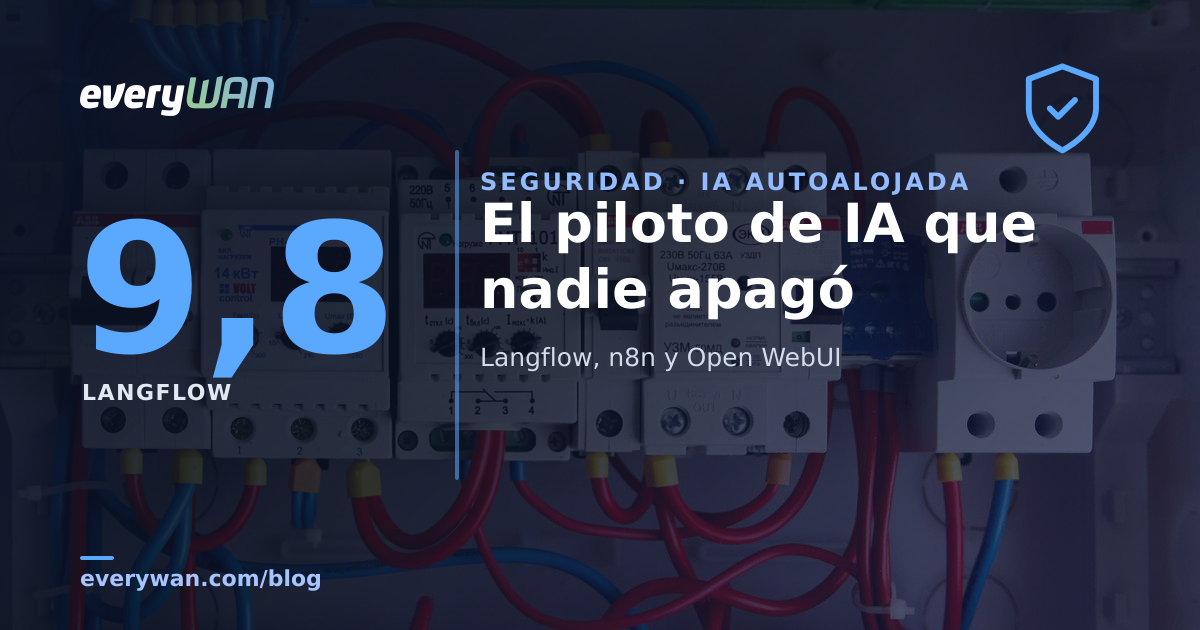
On 4 August, CISA added a 9.8 in Langflow to its exploited-vulnerabilities catalogue: one endpoint that hands superuser tokens to anyone who reaches the port, chained with another that runs whatever code you send it. The patch had been out for six weeks. It is not an isolated case: in Open WebUI the ENABLE_CODE_EXECUTION=false switch turned nothing off, and in n8n anyone who could edit a workflow could run commands on the host. Three products, the same starting assumption. What we do with the AI and automation layer, and when we recommend not self-hosting it at all.

  • 1
  • 2

Subscribe to our newsletter

To receive IT stories, everyWAN news and exclusive subscriber offers, sign up to our mailing list

Minorisa de Sistemas Informaticos y Gestión S.L. © 2026
everyWAN
everyWAN