Tech Blog

everyWAN Blog

Technology, cybersecurity and IT trends that matter

Deep Analysis
Cybersecurity
IT Trends
Filter by:
Sala de baterías de reserva: una estantería metálica con filas de vasos de plomo y bornes rojos y azules, y un técnico trabajando sobre ellos
8 min read

Your UPS takes ten times longer to charge than to drain

On 19 October 2026 the IT systems of Portugal's public health service went down for about five hours. The official explanation fits on one line: two successive power interruptions at the data centre, "the first was resolved immediately, without relevant consequences"; the second left the systems unavailable. Your reserve is sized for ONE event, and the grid does not always fail one at a time. With the arithmetic of recharging, why Spain's Royal Decree 1955/2000 allows seven cuts a year on your own connection while never measuring the interval between them, when NOT to buy more autonomy, and six questions for your provider.
Torre de alta tensión y línea eléctrica cruzando un campo arado hasta el horizonte
7 min read

Barcelona has 63 MW of data centre capacity. The pipeline is 300 km away

Colliers published its snapshot of the Iberian market for April-September 2026: around 450 MW IT live, Barcelona up from 42 to 63 MW, and an Aragonese pipeline of 3,764 MW. The headline "data centres grow 17%" answers no question you ever asked. The two that matter are in the same report: how much colocation capacity is free where you actually are (14% in Barcelona) and how far away the rest is being built: Barcelona has 525 MW announced, but Aragón seven times more, three hundred kilometres away. Because the second room in your recovery plan is not decided in euros: it is decided in kilometres, and you can do the maths yourself with a map.

Bastidor de paneles de parcheo de fibra óptica con mazos de latiguillos naranjas
9 min read

43 CVEs in your array's fibre switch, and not one is critical

On 8 October 2026 the NVD published 43 Brocade Fabric OS vulnerabilities on the same day. None critical, the highest 8.7, and 38 of the 43 require credentials. Those three numbers are precisely why nobody will patch this. Inside: the attacker the batch imagines does not come from the internet —it is another switch in your own fabric—, why the 7.1 on CVE-2026-87659 misleads, the maintenance-window excuse dismantled with the vendor's own documentation, the two version branches that do not line up, and four ownership questions instead of a checklist.

Subestación eléctrica de alta tensión con aisladores, embarrados y un transformador
7 min read

6,329 MW granted to data centres and none in service

The figure ran this morning in the energy press, so nobody in IT is going to read it: for the first time Spain's grid operator has published the breakdown by consumption type of the access capacity granted on the transmission network, and data centres take the largest slice —6,329 MW, 34.2% of the total— with 0 MW in service. Industry, with less capacity granted (5,838 MW), already has 4,346 energised: 74% against 0%. We do the three divisions that are not in the release, and one of them is that more than half the power Spain has promised and not yet delivered is spoken for by server rooms. But the part that made us stop is a different one: in February the network was "75% taken" and today there is margin at more than 35% of nodes, with the improvement coming not from new construction but from revising the CNMC calculation scenario —firm capacity up at 204 nodes, flat at 658, down at 75—. Of the three figures in circulation, only "in service" is physical. What that means the day you ask to go from 4 to 8 kW per rack, why the dangerous answer is not "I cannot" but "you can have them down a single feed", and the four-line annex we suggest stapling to the colocation contract —ours included—.

Vista aérea de un corredor de centros de datos: naves industriales bajas y anchas repartidas a lo largo de una autopista
13 min read

Your cloud can lose one zone. AWS just lost a Region

On 15 September AWS wrote on its health dashboard that it cannot restore resources and data hosted "exclusively" in the Bahrain Region or in the mec1-az2 zone in the UAE. That one word separates the customers who lost data from the ones who did not. The perimeter of that redundancy was published all along: S3 is designed to survive the loss of ONE zone, and zones sit within 100 km of each other. What the documentation says, what the contract says, and the four questions we write down before touching anything.

Sala de celdas de media tensión de una subestación eléctrica
12 min read

"Resilience" is in the title of Spain's data centre decree. It is not in the articles

The consultation window closed today at 17:00. The draft is called "energy and environmental sustainability, resilience and digital sovereignty requirements applicable to data centres", and its article 5 carries "resilience" in the heading. Read in full, it creates not a single resilience requirement: it defers them to whatever regulation already applies to you. We think that is sound legislative technique and bad news for anyone hoping somebody would hand them availability. It does not bind you — the threshold is 1 MW of grid access capacity — but it will reach you anyway, through the contract of whoever hosts you.

Pasillo estrecho de un centro de datos, con un rack abierto de paneles de parcheo de fibra en primer plano y latiguillos aguamarina y amarillos recogidos en las guías de cable
10 min read

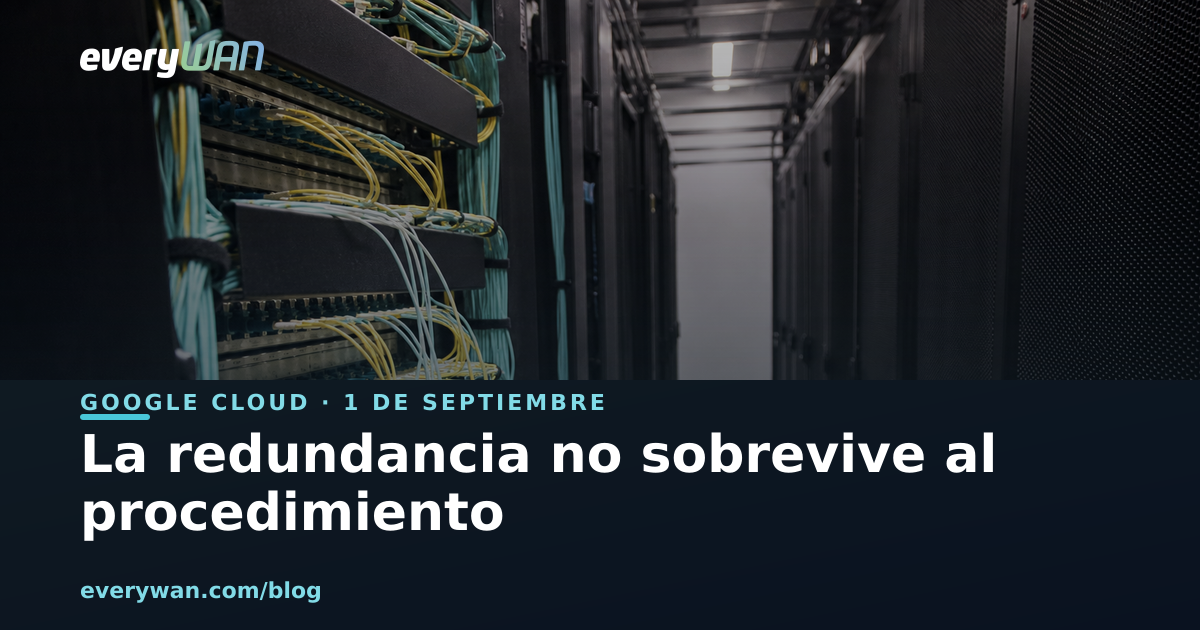
Redundancy does not survive the procedure

On 1 September, a scheduled capacity upgrade sequentially unplugged 100% of the fiber paths serving part of Google Cloud's us-central1-b zone, in thirteen minutes. Just before that, the report describes a correct architecture: physically separated paths, diverse power, tolerance to double and triple failures. A 2003 Berkeley study already explained why none of it helped: operator error is not more frequent than hardware failure, it is just less frequently masked.

Enfriadoras de aire en la cubierta de un edificio industrial, con tubería aislada y grava, bajo cielo cubierto
8 min read

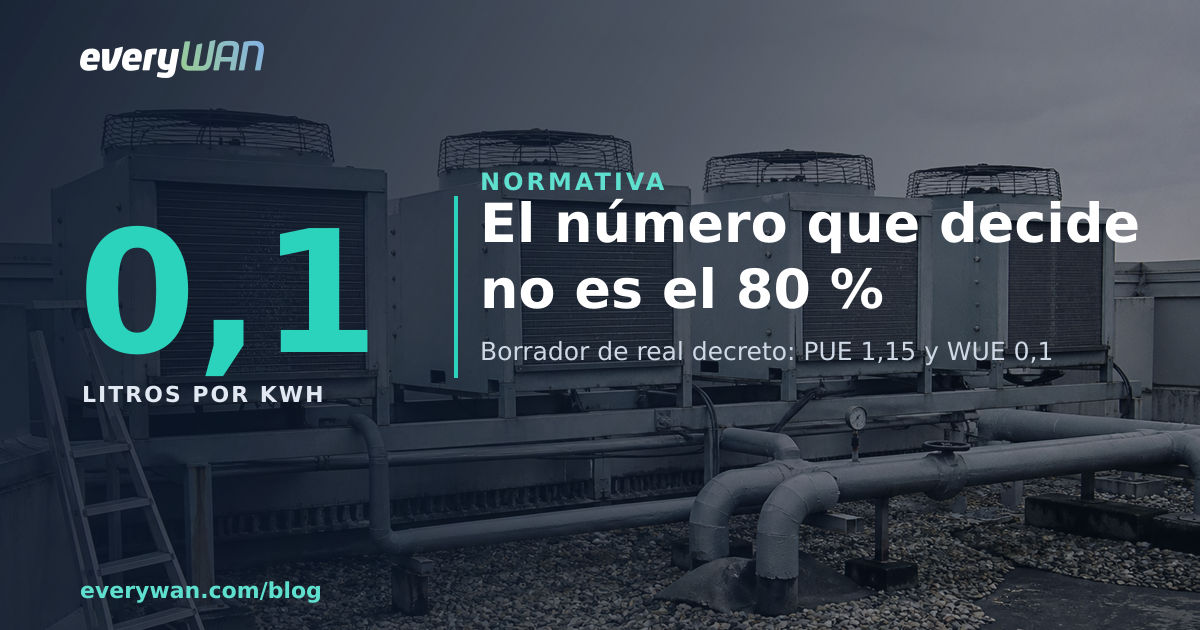
Spain's data centre decree is not decided by the 80% renewables rule: it is decided by a PUE of 1.15

On 27 August Spain opened public consultation on the draft royal decree regulating data centres. Coverage stopped at the 80% hourly renewables rule. We read all 32 pages and there are three things inside that almost nobody has reported: the surcharge scale in article 10, reaching 500% on network tolls and charges; a sentence in article 5.2(b) that leaves the customer's data outside the sovereignty the operator declares; and, in our judgement, the number that really filters projects, a PUE of 1.15 in the fourth transitional provision (with a WUE of 0.1 L/kWh), which the preamble itself acknowledges are the class "A" values proposed by the European Commission. Amazon reported a global PUE of 1.14 in 2025 and 1.15 in 2024.

Cuadro eléctrico industrial abierto en una sala técnica, con embarrado de cobre, magnetotérmicos en carril DIN y cableado de potencia
5 min read

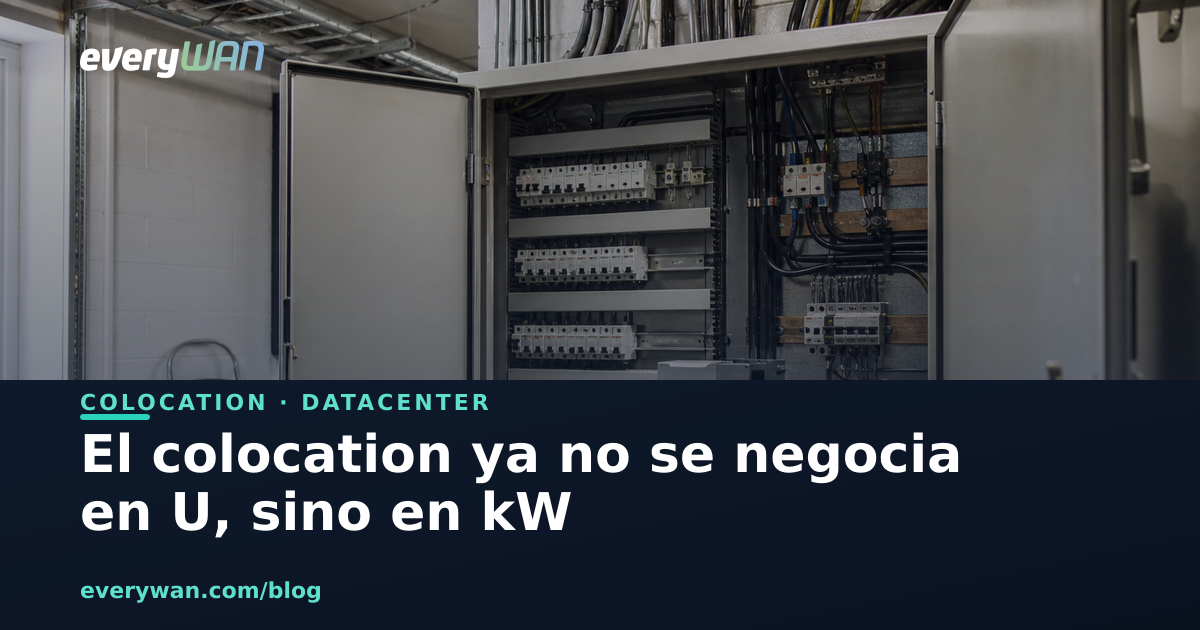
Colocation is no longer negotiated in U: it is negotiated in kW

In the first half of 2026, AI cloud providers signed 420 MW of colocation capacity in Europe. In the same period a year earlier they signed 89. Powered land in the big markets costs 82% more than in 2021. None of that raises your invoice tomorrow, which is exactly why it is worth looking at today: what changes is not the price of a rack unit, it is what your contract actually measures.

Una tormenta de verano avanzando sobre el desierto, origen del fallo de refrigeración que apagó 5.000 servidores
5 min read

Your servers can be switched off by someone you never signed anything with

On 13 August more than 5,000 servers were powered off in a building in Phoenix, taking down the websites, email and DNS of thousands of companies. The decision to shut down was the right one; what is interesting is the chain the order came down, because the end customer sits at the bottom of it with no contract with whoever decides. What to ask about the building your hardware lives in, and why DNS took down people who were not even there.

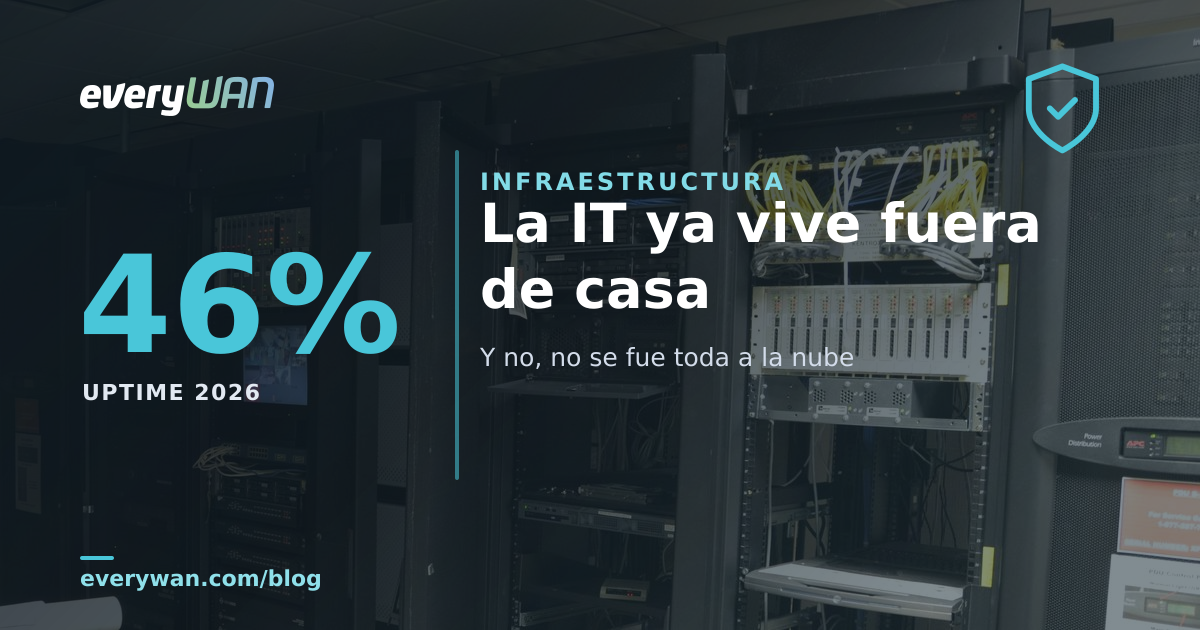
Por primera vez el 46% de las cargas de IT corporativa vive en instalaciones de terceros frente al 44% en centros de datos propios, según la encuesta de Uptime Institute de 2026
8 min read

Half of corporate IT now lives off premises. That does not mean it went to the cloud

On 28 July 2026 Uptime Institute published the figure that went around the industry: for the first time, third-party facilities (46%) overtake companies' own data centres (44%). The number is real. The "the cloud won" reading is not: that 46% puts colocation and SaaS in the same box, and they are opposite decisions. And the most interesting part of the report is not in the headline but in the remaining 10%, and in what is happening to kilowatts per rack.

Caída de Google Cloud en europe-west4-a por fallo de energía y refrigeración en el datacenter
5 min read

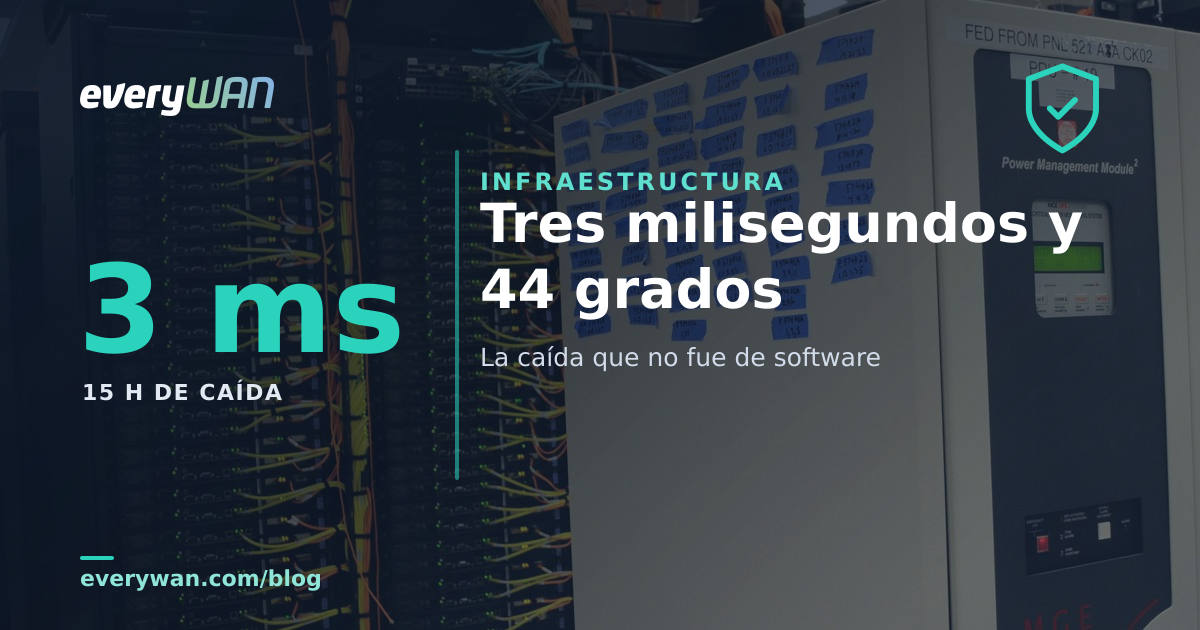
Three milliseconds and 44 degrees: the cloud outage that had nothing to do with software

On 15 July 2026 a three-millisecond voltage dip on the utility feed took three services in a Google Cloud zone in the Netherlands out of service for almost fifteen hours. No CVE, no botched deployment, no BGP route: an electrical transient, a backup system that failed to pick up the load, a chiller controller that dropped offline, and a data hall at 44°C. What exactly failed according to the official incident report, why redundancy on paper is not always redundancy, what it means that a zone is not a building, and the seven questions worth asking any datacenter — including your own — before it happens.

Controladores de gestión BMC expuestos en internet: 36.872 servicios IPMI accesibles por UDP 623
5 min read

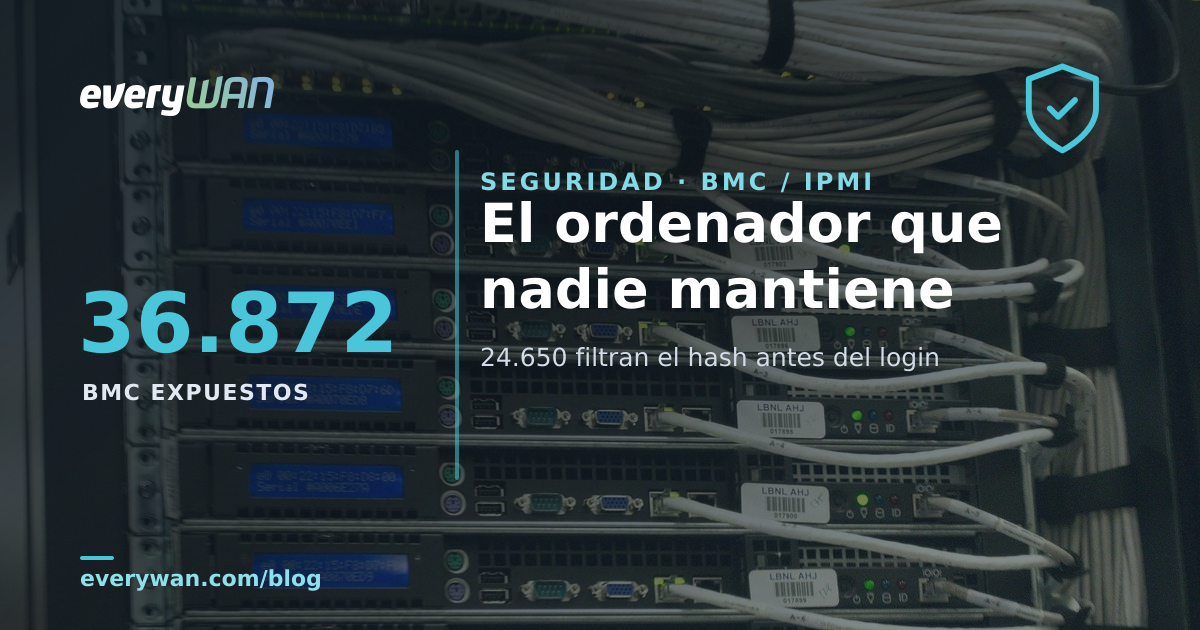
There is another computer inside your server, and 36,872 of them are on the internet

A scan published on 29 July 2026 found 36,872 management controllers (BMCs) listening on the internet over UDP/623, and 24,650 of them hand out material derived from the account password before anyone logs in. This is not a new CVE: it is CVE-2013-4786, a flaw in the IPMI 2.0 specification itself, dating from 2004, which Dell acknowledges has no patch. The numbers, why a factory password falls in between 32 seconds and one hour, why your EDR will not see it and the six steps to close the management plane of your hardware.

Subida del precio de la memoria DRAM y NAND en 2026 por la demanda de centros de datos de IA
5 min read

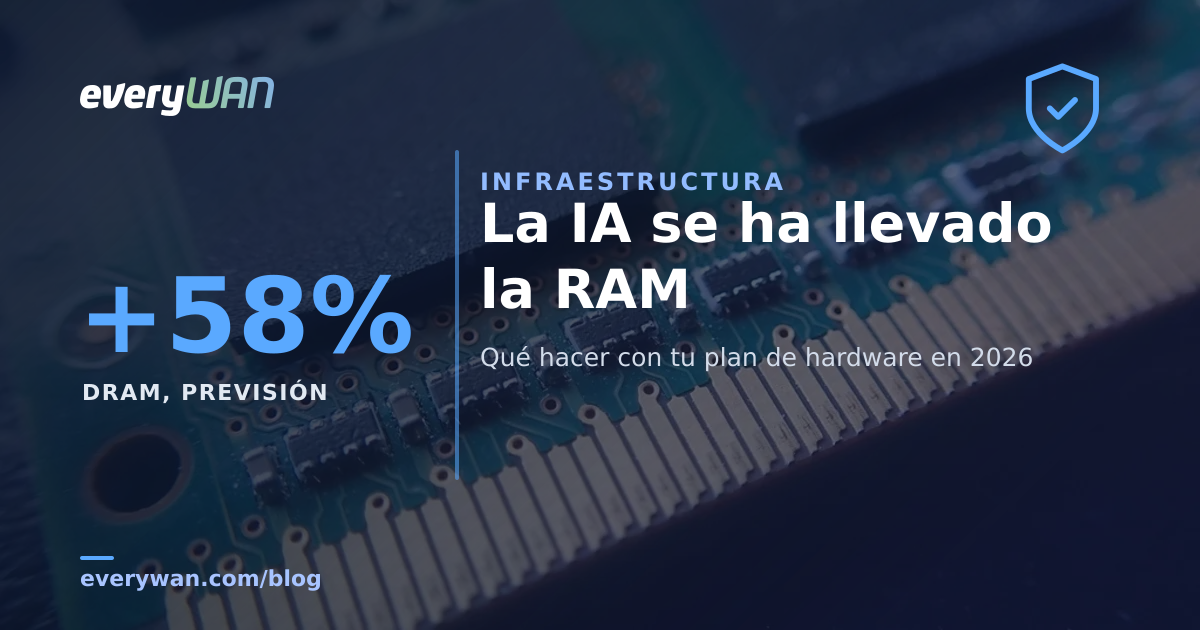
AI took the RAM: what to do with your 2026 hardware plan

TrendForce forecast second-quarter contract price rises of 58% to 63% for conventional DRAM and 70% to 75% for NAND. In one quarter, with nothing inside your company to explain it. Why the big cloud providers are hedged by multi-year contracts and you are not, how this lands in your refresh plan, what to check before signing a purchase order, and how long it lasts — with dates.

Colocation vs cloud público: la cuenta a cinco años, con el caso 37signals
5 min read

The cloud isn't expensive: it's expensive for the wrong workload. Colocation vs public cloud, with the math done

37signals was paying $3.2 million a year for cloud, bought $700,000 of servers and recouped them in the first year; in 2025 it announced moving its 18 PB out of S3. Meanwhile, worldwide cloud spending keeps growing at a 20% annual clip. Both things are true: the difference is who does the math. Which workloads overpay in the cloud, when the cloud still wins, and the five-year colocation math, line by line.

Subscribe to our newsletter

To receive IT stories, everyWAN news and exclusive subscriber offers, sign up to our mailing list

Minorisa de Sistemas Informaticos y Gestión S.L. © 2026
everyWAN
everyWAN