Tech Blog

everyWAN Blog

Technology, cybersecurity and IT trends that matter

Deep Analysis
Cybersecurity
IT Trends
Filter by:
The Cisco flaw that steals nothing: it just reboots the door your people come in through
8 min read

The Cisco flaw that steals nothing: it just reboots the door your people come in through

On 11 August Cisco published an advisory for ASA and Secure Firewall Threat Defense: an HTTP request against the remote access SSL VPN service makes the device reload. The CVSS vector reads C:N/I:N/A:H —nothing is leaked, nothing is altered— and two hours and twenty minutes later it was already in CISA's KEV catalog with a 14 August due date. Three days. What to check on the device, why the patch costs exactly what the attack costs, and when this does not concern you.
Ceph does not perform like the datasheet: it performs like the benchmark the OSD ran at boot
8 min read

Ceph does not perform like the datasheet: it performs like the benchmark the OSD ran at boot

Since Ceph Quincy the scheduler for BlueStore OSDs is mClock, and the work ceiling it shares out does not come from the vendor datasheet: it comes from a benchmark each OSD runs at boot. If that measurement is discarded, you are left with 315 IOPS for a spinning disk and 21,500 for a solid-state one, whatever you bought. How to check what your cluster believes, which parameters stopped having any effect, and when the drive really is the problem.

The vCenter advisory said there was no known exploitation. It held for five days
8 min read

The vCenter advisory said there was no known exploitation. It held for five days

Broadcom published VMSA-2026-0006 on 29 July with no information suggesting exploitation, and that is how we quoted it here the next day. On 3 August the first compromised vCenters started connecting to attacker infrastructure, and on 12 August QUIRSO published the count: 361 victim IP addresses across 47 countries. What those numbers mean, what they do not, and the question that decides whether this concerns you: who can open a connection to your vCenter.

The DNS server you have to patch is your domain controller
5 min read

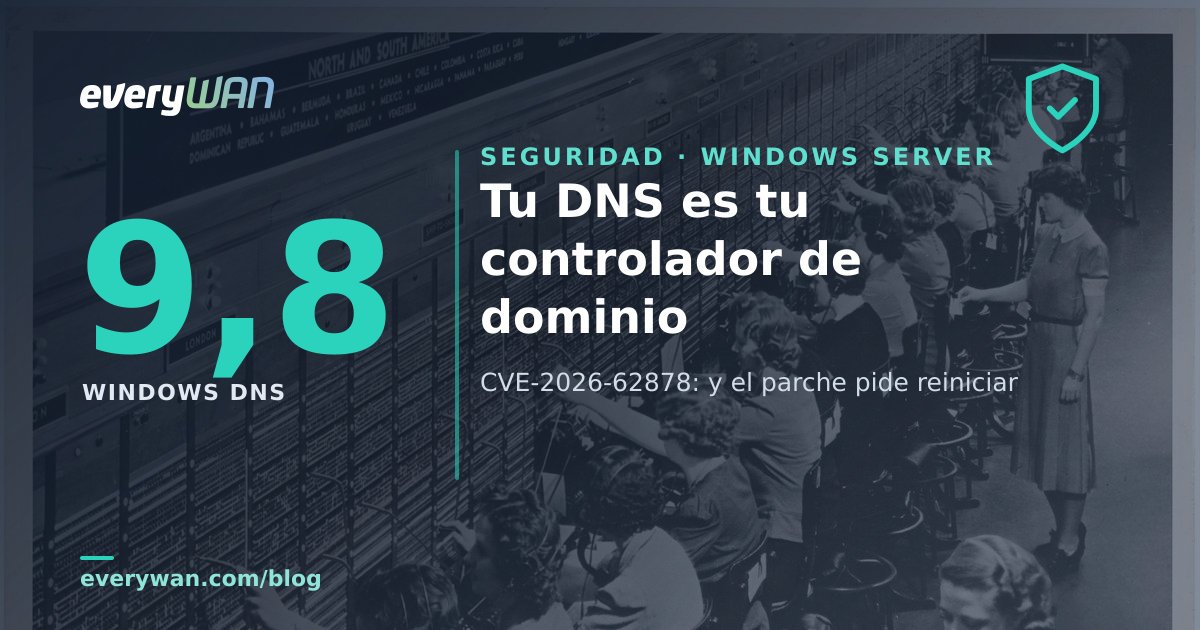
The DNS server you have to patch is your domain controller

CVE-2026-62878 scores 9.8: a stack-based buffer overflow in Windows DNS, no authentication and no user interaction. Microsoft's bulletin lists sixteen affected products and all sixteen require a reboot. In many of the networks we come across, that machine is also the one validating everybody's passwords, which is why it hasn't been rebooted in months — sometimes years. What the bulletin actually says, what goes down while it boots, and the checks we run before the window.

They crossed from a wind farm to a power plant turbine through the grid operator's private APN
8 min read

They crossed from a wind farm to a power plant turbine through the grid operator's private APN

On 8 August CERT Polska published its analysis of the 29 December 2025 attack on a Polish combined heat and power plant. The attacker got in through a FortiGate with no multi-factor authentication, hopped to a cellular router, crossed the distribution operator's private APN and put three families of Siemens PLCs into STOP mode. The report does not cite a single CVE in the whole chain: what it describes is a mobile network we all call private in which any device could talk to any other.

Three settings decide whether Claude processes your documents in Copilot, and one was decided by your tenant's creation date
5 min read

Three settings decide whether Claude processes your documents in Copilot, and one was decided by your tenant's creation date

Microsoft turned Anthropic models on by default in Microsoft 365 Copilot, but not in the EU. There are three separate settings with three different defaults, one of them depends on whether the tenant was created before or after 25 March 2026, and Microsoft's own documentation sends you to the Message Center to find out yours. What each source says, what cannot be inferred from them, and the twenty-minute review.

Proxmox HA does not prevent downtime: it shortens it (and sometimes causes it)
8 min read

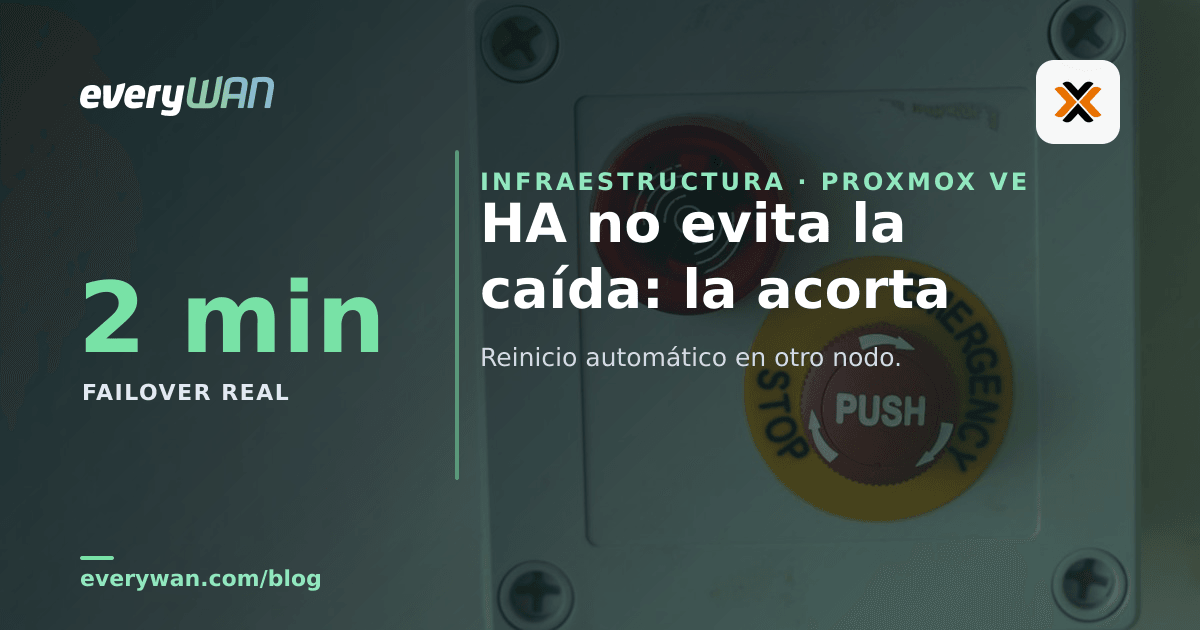
Proxmox HA does not prevent downtime: it shortens it (and sometimes causes it)

Proxmox VE's own documentation sets the ceiling: about 2 minutes of error detection and failover, and no more than 99.999% availability. What really happens when a node dies (a cold start, not a live migration), why a healthy node reboots itself 60 seconds after losing quorum, the requirements everybody skips, and when we do not deploy HA at all.

DeadLock does not break your antivirus: it stops it like any other service
5 min read

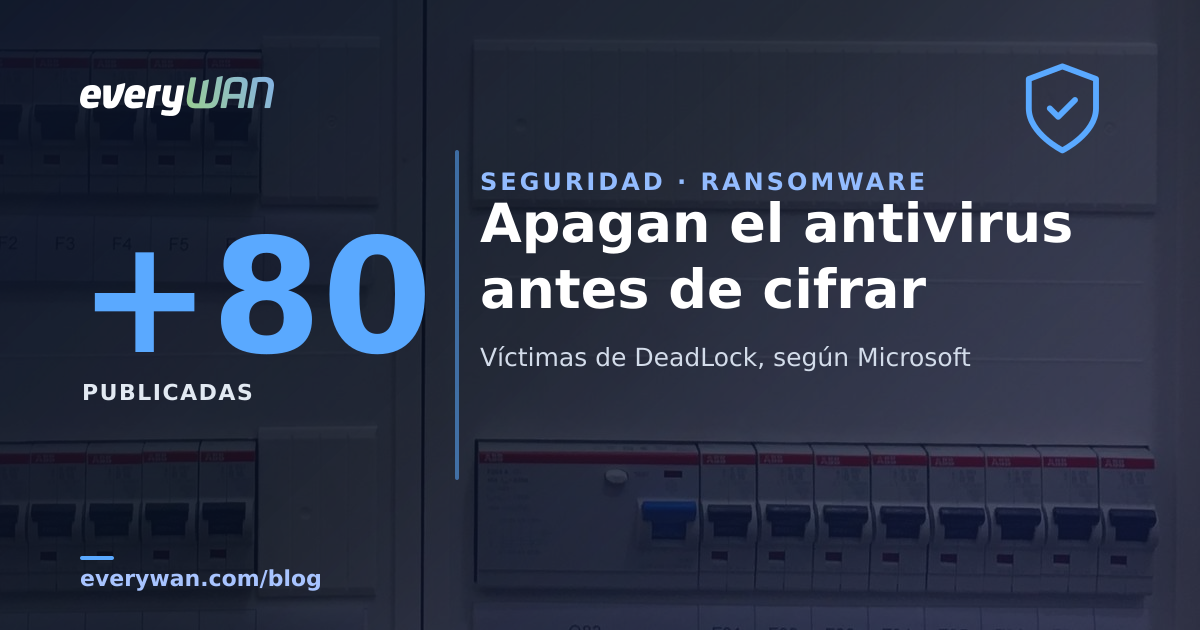
DeadLock does not break your antivirus: it stops it like any other service

On 10 August Microsoft published its breakdown of the DeadLock encryptor. The interesting part is not the cryptography: it is the list of things it switches off before encrypting anything. Defender stopped like a service, shadow copies gone, domain controller services halted and — this is the one almost nobody looks at — event log channels not cleared but disabled in the registry.

RTO and RPO without the fluff: two numbers signed but never calculated

Warning: Undefined array key "read_time" in /var/www/html/public/blog.php on line 7312
min read

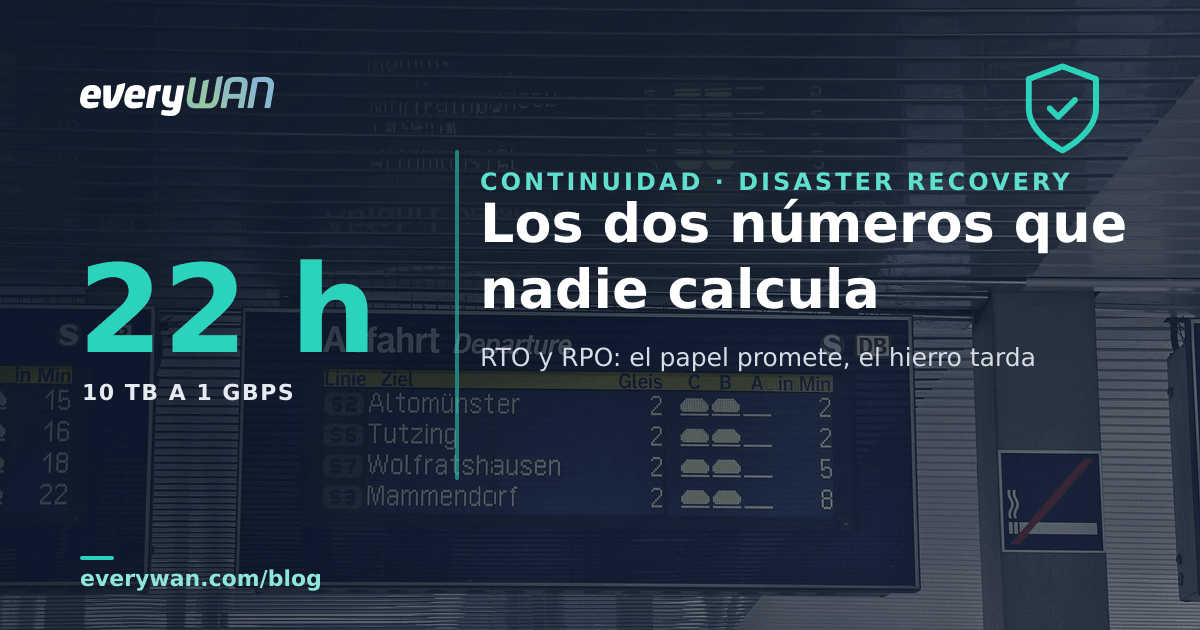
RTO and RPO without the fluff: two numbers signed but never calculated

Almost every continuity plan carries an RPO and an RTO written with great confidence and calculated with none. What those two numbers actually promise, why your real RPO is the one of your last verified backup, the four clocks inside an RTO, and the arithmetic that dismantles a "four hours" sitting on a 1 Gbps link.

By the time CISA flagged LoadMaster, the patch had been out for 64 days

Warning: Undefined array key "read_time" in /var/www/html/public/blog.php on line 7312
min read

By the time CISA flagged LoadMaster, the patch had been out for 64 days

CISA added CVE-2026-8037 to its Known Exploited Vulnerabilities catalog on 7 August and set the deadline for the 10th. Progress had shipped the patch on 4 June. In between: a public PoC on 29 June and forty days of exploitation attempts. If your patch queue is ordered by the KEV catalog, you are late by design — here is the clock you should actually be watching.

That recording lives in the OneDrive of someone who no longer works here

Warning: Undefined array key "read_time" in /var/www/html/public/blog.php on line 7312
min read

That recording lives in the OneDrive of someone who no longer works here

At the end of September, Microsoft moves whiteboards created in Teams channels out of the creator's OneDrive and into the channel's SharePoint site. It is a small change that concedes a large problem: much of a company's collective work lives inside one individual's personal account. Where each recording actually lands, why the deletion clock starts the day you delete the account rather than the day the person leaves, and why leaving the account blocked "just in case" is not the plan you think it is.

ChainDrop: 444 npm packages compromised and not a single patch to apply
5 min read

ChainDrop: 444 npm packages compromised and not a single patch to apply

On 4 August, between 09:35 and 13:20 UTC, a worm spread by itself across 444 npm packages, stealing the credentials it needed to keep spreading. The first malicious version went out through the legitimate pipeline, carrying a valid provenance signature. And there is a trap that inverts the correct reflex: revoking the stolen token is exactly what fires the next payload. What to look for in your lockfiles, in what order to rotate, and why there is no fixed version to install here.

Metabase: the data dashboard that was also the keyring
5 min read

Metabase: the data dashboard that was also the keyring

On 3 August, attackers walked into Metabase instances through the "forgot my password" endpoint, unauthenticated, with a CVSS of 10.0. Framework and Tally have already told their users. What an attacker takes from a compromised BI dashboard is not the charts: it is the credentials for every connected database, stored unencrypted unless somebody turned encryption on by hand. Which versions are in range, why this hole never shows up in your CVE feed, and why patching is the easy half of the job.

The macOS malware that exploits nothing: you paste it in yourself
5 min read

The macOS malware that exploits nothing: you paste it in yourself

On 6 August, Huntress published its analysis of a Go-based credential stealer for macOS that had been sitting inside a monitored Mac for three months. There is no CVE, no exploit and nothing to patch: the chain starts with a web page dictating a command and a user pasting it into Terminal. What that command does line by line, why Gatekeeper never gets involved, what it actually takes from a company (Keychain, session cookies, browser passwords) and why the warning Apple added in macOS 26.4 is a speed bump rather than a wall.

Entra Connect: the date that stops your sync, and the date that just emails you

Warning: Undefined array key "read_time" in /var/www/html/public/blog.php on line 7312
min read

Entra Connect: the date that stops your sync, and the date that just emails you

On 30 September 2026, any Entra Connect synchronisation running below version 2.5.79.0 stops working. This is not the Cloud Sync migration: it is a separate thing, and it is the only one of the two with a fixed date. The migration runs in waves, allows exceptions and has no announced retirement date. What exactly breaks when sync stops (hint: not email — the offboarding that never reaches the cloud), why auto-upgrade fails to save precisely the servers that need it, and the eight rows in Microsoft's own comparison table that decide whether you can move to Cloud Sync yet.

Nobody exploited anything: who verifies it is you before resetting your MFA
5 min read

Nobody exploited anything: who verifies it is you before resetting your MFA

Sounding convincing is not proof of identity, and in many organisations it is the only thing asked for. On 7 August Levi Strauss told the SEC that corporate information was taken from three company computers through social engineering: the work we use to measure security — patch, update, reboot — would have changed nothing. The joint CISA and FBI advisory on Scattered Spider says the targets are large companies and their contracted IT help desks, and that includes us. Why 65% of initial access now arrives through identity, why passkeys will not save you if the desk can enrol a new factor, and the eight things we ask of a reset procedure.

Secure Boot expired in June and nothing broke. That is the problem
8 min read

Secure Boot expired in June and nothing broke. That is the problem

On 24 and 27 June, two of the certificates Microsoft has used to sign the boot chain since 2011 expired. Not a single machine went down: Microsoft states plainly that the device keeps starting and updating normally. What stops is something else — revocations, the boot manager, early-boot mitigations — and it raises no alert at all. A third date is still open: 19 October. How to check in two minutes whether your Windows estate, your Linux servers and — this is the one nobody looks at — your virtual machines already carry the 2023 certificates.

Cross-tenant recall: Exchange Online lets another company delete mail from your mailboxes
5 min read

Cross-tenant recall: Exchange Online lets another company delete mail from your mailboxes

In mid-August Microsoft starts rolling out cross-tenant message recall in Exchange Online (MC1423106). It ships switched off, and you do not turn it on to recover your own emails: you turn it on so senders in another tenant can delete messages already delivered to your people's mailboxes. What cloud recall does today (hard delete, read messages included, retrying for up to 24 hours), why the allow list looks far too much like the list of domains invoice fraud uses, what actually protects you (retention, not the checkbox), and the logging gap almost nobody has read.

Zapscape and SCTPhantom: your Proxmox does not run Debian's kernel
5 min read

Zapscape and SCTPhantom: your Proxmox does not run Debian's kernel

Two Linux kernel flaws published this week break the two boundaries we take for granted: the virtual machine (Zapscape, CVE-2026-64561) and the container (SCTPhantom, CVE-2026-64564). Understanding them is the easy part. The hard part is answering whether the kernel your node actually boots already carries the fixes, because the versions in the advisory — 6.12.101, 7.1.6 — do not exist on your server: Proxmox does not use Debian's kernel. The exact proxmox-kernel versions that do close them (and why 7.0.14-9 is not enough), how to check in four commands, and who genuinely needs to hurry.

Subscribe to our newsletter

To receive IT stories, everyWAN news and exclusive subscriber offers, sign up to our mailing list

Minorisa de Sistemas Informaticos y Gestión S.L. © 2026
everyWAN
everyWAN