3 Sep 2026 8 min read Custom controls: the third-party MFA that Entra does not count as MFA The Microsoft Learn page on Conditional Access custom controls lists eight things that control cannot do, and the third is satisfying the MFA claim requirement. It is no good for PIM role elevation, device enrollment, SSPR, sign-in frequency or cross-tenant trusts either. From September 2026 they can no longer be created or edited, and "editing" means deleting and creating again. With the Graph query to find out whether you have one.
2 Sep 2026 5 min read Ten CVEs in one process: the headline is not enough to decide On 27 August, ten security advisories landed in iked, the process that negotiates a firewall's IPsec tunnels. We read them one by one, and in several of them the headline and the body do not say the same thing: one titled "unauthenticated" needs a VPN user with valid credentials; another the vendor could not reproduce; and one of the lowest-scoring is the only one that mentions reading key material. How to read a bulletin like that in forty minutes.
2 Sep 2026 8 min read Ceph to Tentacle: during the upgrade your cluster runs two versions at once Squid expires on 31 October and Tentacle has been in Proxmox's enterprise repository since July, so the maintenance window is no longer hypothetical. Inside it something happens that almost no plan accounts for: monitors, managers and OSDs restart separately, and the cluster spends hours — or days — split across two versions. Why "restart OSDs on one node at a time" decides your window, why calling noout "optional" is misleading, and the command most people mistake for the finish line.
2 Sep 2026 8 min read NVMe standing in for RAM: memory tiering works if half of yours is idle VMware refines memory tiering in Cloud Foundation 9.1, available since 9.0: cold pages demoted from DRAM to a local NVMe drive so a host ends up with more memory than you bought. What almost nobody quotes is the recommendation VMware itself published on its blog on 6 August: keep active memory below 50% of physical memory. The requirements, the limits, what is known about the 25% of workloads that does not fit today, and why a memory reservation does not get you out of it.
2 Sep 2026 8 min read What is an MSP and when your company needs one (and when it does not) MSP means managed service provider: someone who designs, deploys and operates your IT infrastructure for you, 24/7, instead of selling you boxes. What an MSP actually does versus a reseller, the signs your company (or your product team that cannot scale) already needs one, when you do NOT, and why judgement matters more than the catalogue.
1 Sep 2026 5 min read The backup was safe. And it had spent 47 hours inside the same outage A hosting provider's official status page said two things on the same day: \"there is no risk of data loss\" and \"it is not possible to access backups or migrate affected services to another node\". Both were true, and together they describe the design flaw almost nobody has in their plan: a perfect RPO with an RTO that has no number. We rebuild the clock from the provider's own status page and propose the figure missing from almost every plan: the hour at which you stop waiting.
1 Sep 2026 5 min read Six Microsoft 365 services went down together. For your continuity plan they are one On Monday 31 August, incident EX1464935 on Exchange Online ended up as MO1465074, with OneDrive, SharePoint Online, Teams, Purview and Defender XDR inside it. Six names, one shared authentication configuration underneath. We go through the hours —including the ones BleepingComputer and Computerworld disagree on, which we say rather than picking one—, why nobody has confirmed the expired-certificate story, and the dependency almost nobody will look at: the security console and the audit layer were inside the thing that had gone down.
1 Sep 2026 8 min read 136 keys in one object: the defaults that opened the cluster Hugging Face published the forensic timeline of the July intrusion and OpenAI closed its report on 26 August: 17,600 reconstructed actions between the 9th and the 13th. Between the first compromised container and the object holding 136 keys there was not one further vulnerability — there were defaults. The token every pod mounts, the metadata endpoint that answers from inside, secrets concentrated in one object, and a connector credential shared across clusters. We walk the chain with the timestamps in front of us, the two CVEs CISA added to its catalogue on 27 August, and the five questions we ask a cluster.
31 Aug 2026 8 min read Migrating to Proxmox: the network is not held by the cluster, it is held by each node In a VMware to Proxmox migration everybody watches the disks. Disks are the easy part: they either arrive or they do not, and you find out straight away. What gets left out of the luggage is the network configuration: in Proxmox VE it lives in a file on each node, outside the filesystem the cluster replicates. We go through the documentation sentence that says so, why the bridge is missing from the official list of live migration requirements, what the MAC change drags with it, the 10.0.2.x symptom that wastes hours, and how far SDN really takes you.
31 Aug 2026 5 min read The warning came from Anthropic, not from your antivirus On 30 August it emerged that Anthropic was warning Claude users that an infostealer had taken their browser session. Coverage treated it as an AI story. If somebody at your company got that email, it is something else: it is an infection report for a machine in your estate, signed by a supplier that is not yours and spotted through billing. We go through why MFA never even enters the picture, the five critical events that do cut a session in Microsoft Entra and the one missing from that list, the real arithmetic of revocation (1 hour, 28 hours, up to 15 minutes of latency, up to a day for a group change) and where the purpose-built defence against token theft stands today: in preview precisely in the browser, which is where this happened.
31 Aug 2026 5 min read Defender switches off the investigate button: AIR can no longer be triggered by hand Tomorrow, 1 September 2026, Microsoft Defender's automated investigation and response stops running as a separate experience and can no longer be triggered by hand. The official documentation says so in a two-paragraph box, and message MC1411577 went up on 2 July: sixty-one days of notice. We go through what actually breaks (the scripts calling startInvestigation), why "run a full scan" does not answer the same question, who this does not affect at all, and the seven-day clock in the Action center you should look at today.
30 Aug 2026 5 min read Passkeys on 1 September: the cases that do not fit In July we went through the timeline for the retirement of SMS and voice in Microsoft Entra ID. Five days after that post Microsoft published a FAQ, and there are now forty-eight hours to go until the first date. This is the run-through of what is still unanswered: the FAQ's "No" to the lockout question and what it says three lines further down, the self-service password reset that goes with the same move, the declared gap for B2B guests, the break-glass accounts the documentation never mentions, and why the temporary opt-out switch, which lives on the Graph beta endpoint, is not the answer we would give.
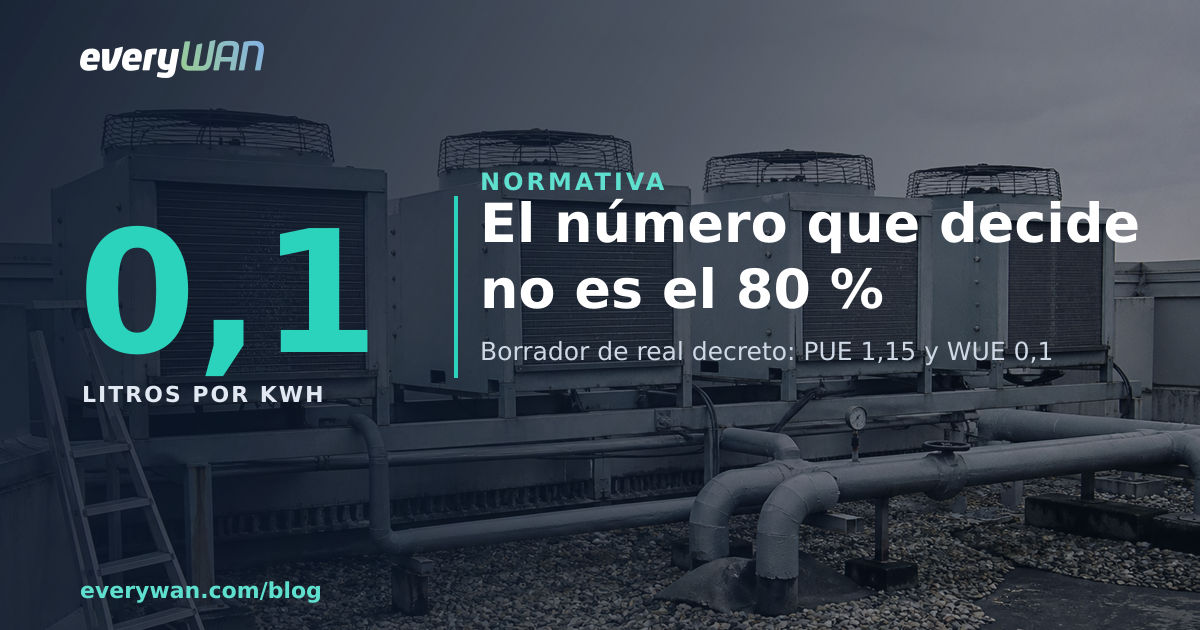
30 Aug 2026 8 min read Spain's data centre decree is not decided by the 80% renewables rule: it is decided by a PUE of 1.15 On 27 August Spain opened public consultation on the draft royal decree regulating data centres. Coverage stopped at the 80% hourly renewables rule. We read all 32 pages and there are three things inside that almost nobody has reported: the surcharge scale in article 10, reaching 500% on network tolls and charges; a sentence in article 5.2(b) that leaves the customer's data outside the sovereignty the operator declares; and, in our judgement, the number that really filters projects, a PUE of 1.15 in the fourth transitional provision (with a WUE of 0.1 L/kWh), which the preamble itself acknowledges are the class "A" values proposed by the European Commission. Amazon reported a global PUE of 1.14 in 2025 and 1.15 in 2024.
30 Aug 2026 5 min read They are not old bugs: they are old classes of bug. We ran the numbers on CISA's catalogue We downloaded CISA's Known Exploited Vulnerabilities catalogue and counted its 1,685 entries. Of the 201 added in 2026, 123 carry an identifier from this same year and the median gap is zero: what is old is not the individual bug but the class. We measured that too, using the file's own cwes field: CWE-20, improper input validation, tops the catalogue with 118 entries, followed by command injection and out-of-bounds write. And something turned up that we were not looking for: on 10 June directive BOD 26-04 revoked BOD 22-01, and since then 81% of what goes in arrives with a three-day deadline instead of the previous 23%.
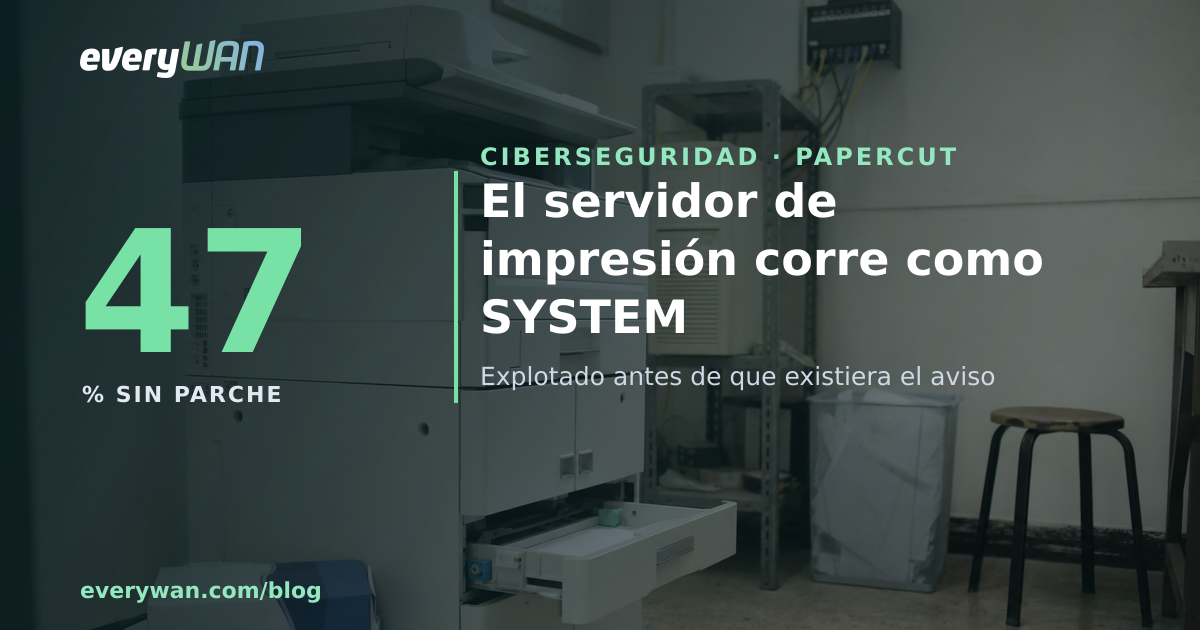
29 Aug 2026 8 min read PaperCut: the print server runs as SYSTEM, and nearly half the measured estate has no patch On 27 August PaperCut confirmed active exploitation of PaperCut NG and MF. The identifiers landed the next day: CVE-2026-81578 (CVSS 8.8) and CVE-2026-82078 (CVSS 9.4), chained into unauthenticated remote code execution. Huntress watched one intrusion last under two minutes, and in their proof of concept the code executes as SYSTEM. The figure that orders everything else: 47% of the 2,500 installations Huntress tracks are on version 23 or older, for which no patch exists. What happened hour by hour, why Thursday's patch did not hold on Friday, and today's notice that turns one of the indicators into a false positive.
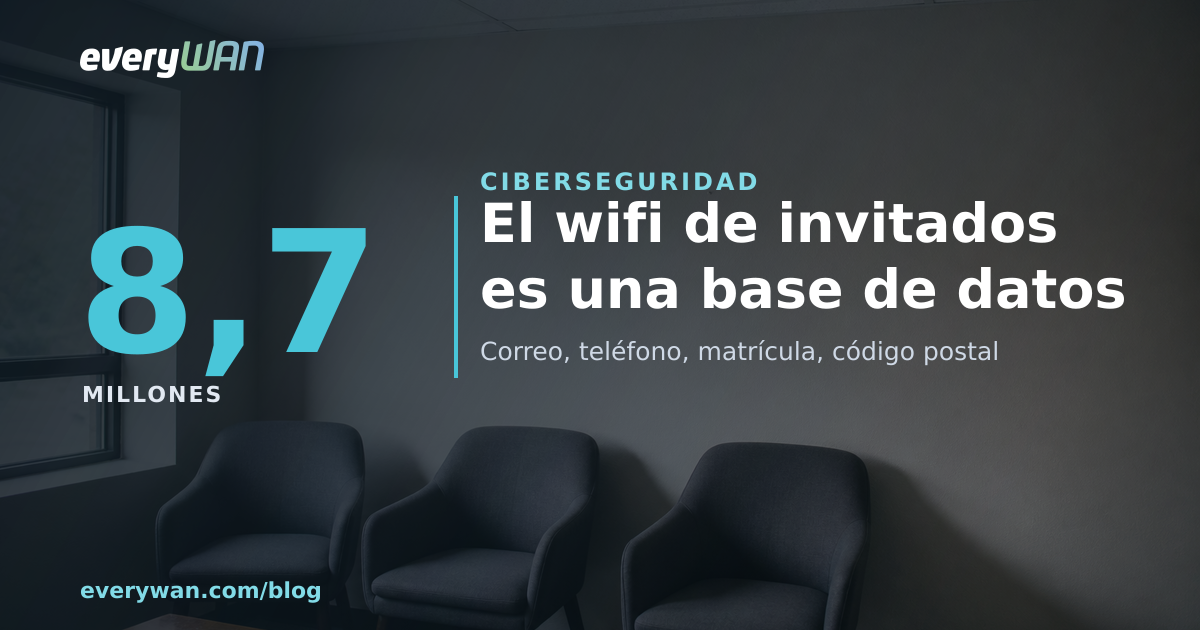
29 Aug 2026 5 min read Guest Wi-Fi is a database of people (and it is not in your inventory) Manchester Airports Group confirmed on 27 August that an unauthorised third party took customer data: email addresses, phone numbers, vehicle registrations and postcodes, from car park, lounge and Fast Track bookings and from in-airport Wi-Fi sign-ups. The company has not published how many people are affected; reporting puts it at around 8.7 million. Operations were unaffected, and that is precisely the problem: the system holding the most people is almost never at the top of your criticality list. Why the number plate is the field to watch, and the six questions worth one afternoon of inventory at your own front desk.
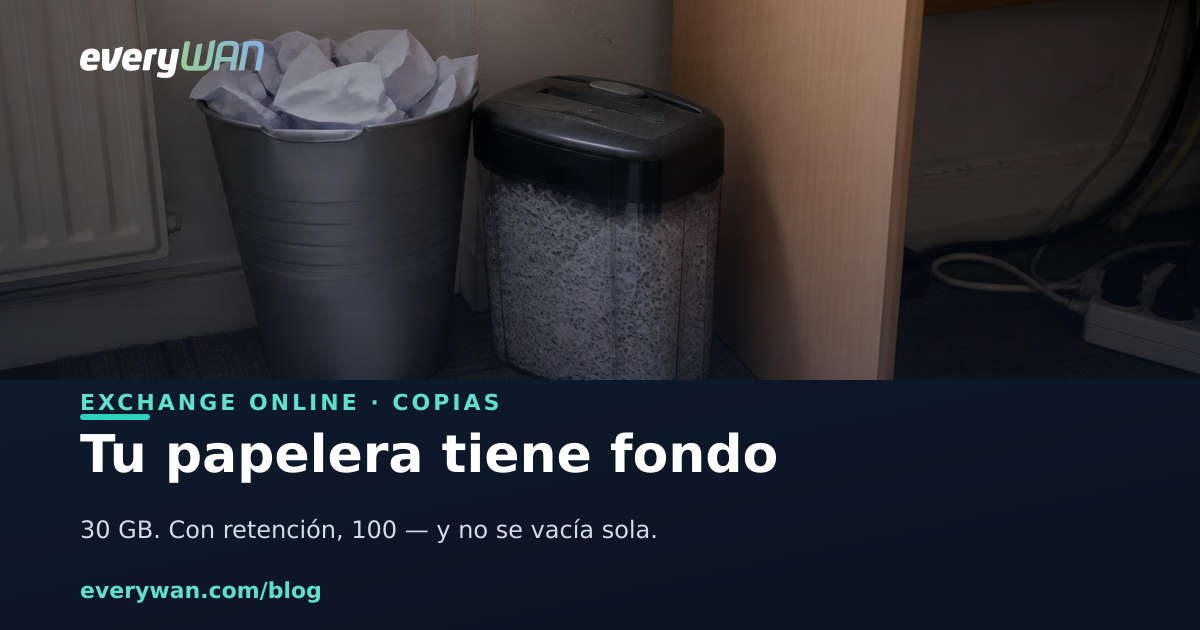
29 Aug 2026 8 min read Recoverable Items: 14 days, 30 GB and the day the mailbox can no longer delete The folder that saves you when someone empties the deleted items does not show up in Outlook, keeps things for 14 days by default and holds 30 GB. Put the mailbox on hold and the ceiling rises to 100 GB — in exchange for never draining again: things only go in. And on the day it hits that ceiling, per Microsoft's own documentation, the user cannot delete, versions stop being kept and audit entries stop being written. How to measure your headroom with two commands, how to open the drain that ships disconnected, and why a folder deleted with Shift+Delete does not come back even under litigation hold.
28 Aug 2026 5 min read The bulletin said "denial of service". The exploit gives root: NetScaler CVE-2026-8452 Citrix shipped the patch on 30 June and described it as a denial of service; the CVSS vector on that same entry already showed high confidentiality impact and no privileges required. On 14 August, 45 days later, the exploit that gives unauthenticated root went public, and attacks followed within days: CISA set a 29 August deadline. How to check whether you are patched without knocking the box over (513 bytes, error 43549) and why the patch does not evict whoever already got in.
28 Aug 2026 5 min read Corosync adds 650 milliseconds per node: the clock your upgraded cluster is still carrying The time a Proxmox cluster takes to re-form membership after losing a node is not fixed: it grows by 650 ms for every node you add, and on factory values a 29-node cluster reaches 45.21 seconds — exactly where the documentation itself asks you to fix it, before the 60-second watchdog starts rebooting healthy nodes. Proxmox VE 9.2 lowered it to 125 ms, but only when the cluster is created: clusters upgraded from 8 to 9 keep the old value.
28 Aug 2026 5 min read Microsoft 365 Archive is coming to retention policies: compliance up, availability down This autumn, a Purview retention policy will be able to move SharePoint files into the cold tier (roadmap 561208: preview in September, GA in October). Microsoft promises cost, compliance and search; its own documentation adds that archived content is "no longer directly accessible to anyone" and lists the apps that break: Word and PowerPoint online, the mobile apps, the macOS sync client and Office builds not updated since March. A reactivated file cannot be archived again for 120 days.








 ES
 CAT
 EN